Ogawa et al., 2022. Assessing Edible Filamentous Fungal Carriers as Cell Supports
for Growth of Yeast and Cultivated Meat
https://www.mdpi.com/2304-8158/11/19/3142
Foods 2022, 11(19), 3142; https://doi.org/10.3390/foods11193142
Why? Search for novel materials that support growth and differentiation of cells.
Aspergillus oryzae UCD 76-2 grown in pellets (0.9 mm diameter), then inactivated and tested for adherence of yeast (S. cerevisiae ATCC MYA-245) or mouse myoblast (ATCC CRL-1772) cells.
Aspergillus oryzae is edible, grows quickly on cheap substrates. Hyphae structure is dense and flexible, has hollow spaces and porous wall that allows transfer of nutrients. Protein-glucan-chitin composition provides many anchor points for cells.
Inactivation: autoclaving (= heat-treated) or submerging in ethanol (= chemically treated).
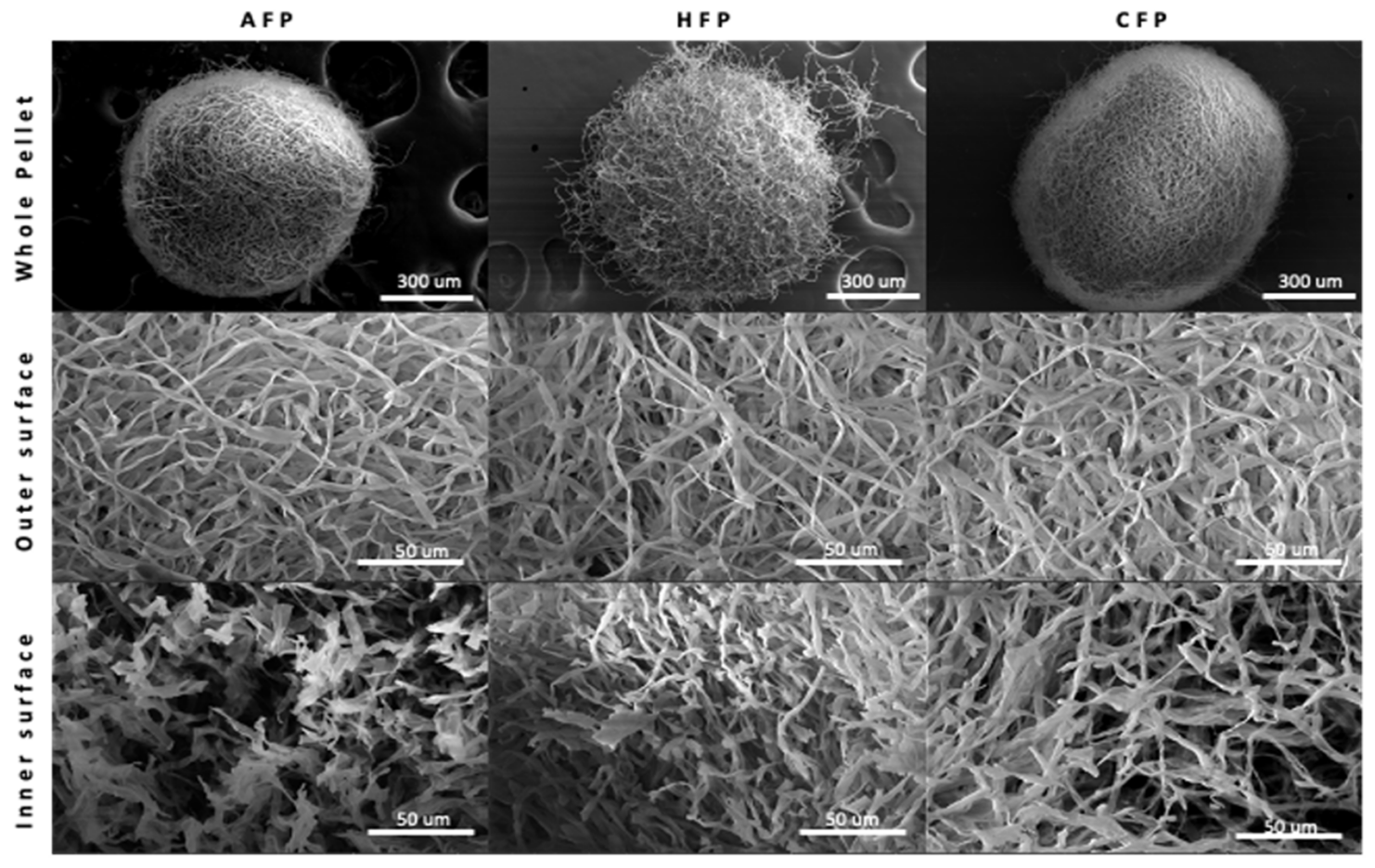 SEM of whole pellet, outer surface, and inner surface of fungal pellets. Active fungal pellets
(AFP), heat-treated fungal pellets (HFP), and chemically treated fungal pellet (CFP). (Credit: Ogawa et al., 2022)
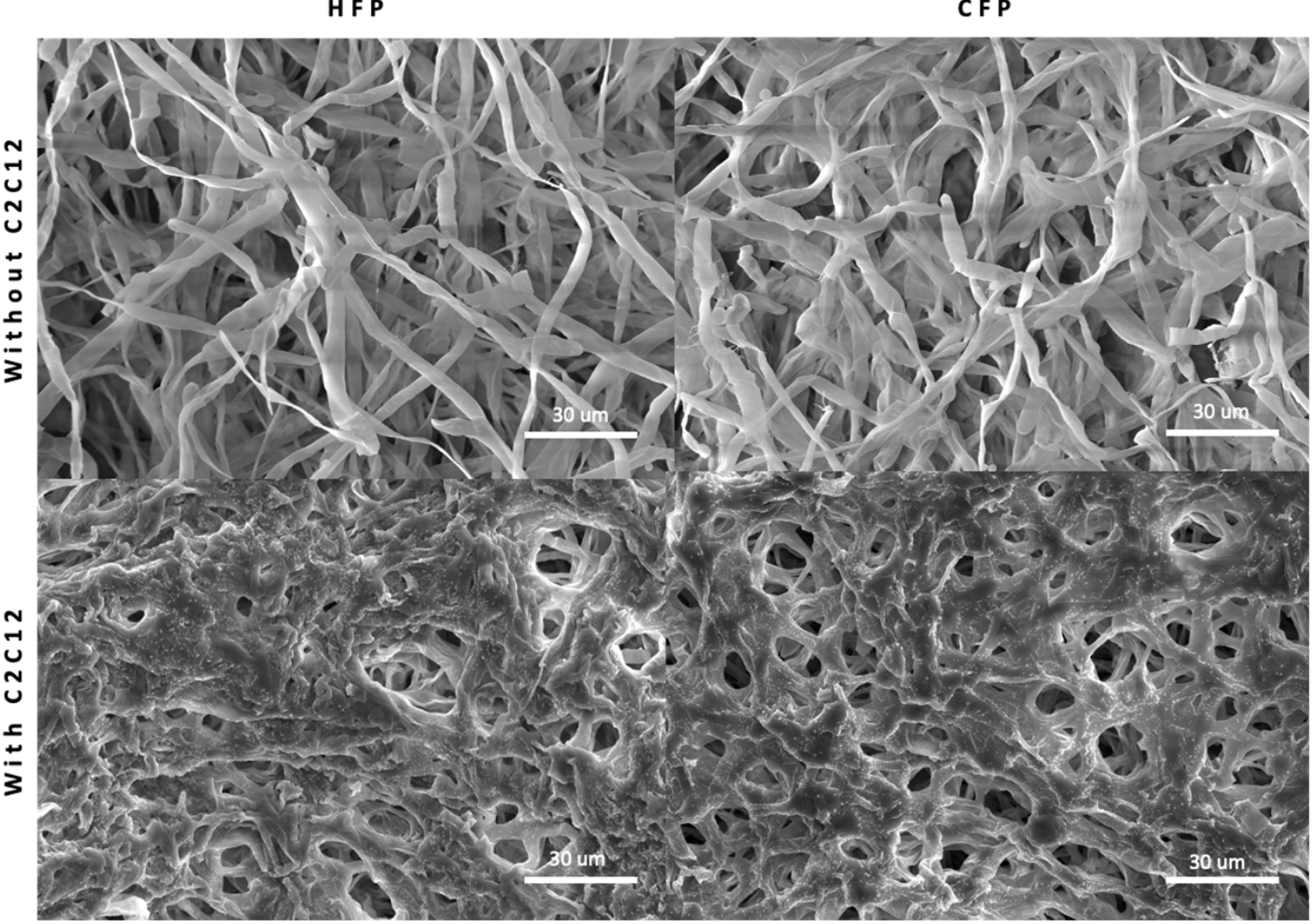 SEM of raw fungal pellet surface (top) and colonized with myoblasts (bottom). (Credit: Ogawa et al., 2022)
Results:
- Inactive fungal pellets can act as support for cell attachment and growth.
- Heat inactivation worked better than chemical inactivation with ethanol.
- Next: In future experiments, cell attachment can be enhanced by modifying the fungal pellet, changing fermentation conditions, utilizing different species/strains of filamentous fungi, or engineering fungi with other desired properties.