https://www.youtube.com/watch?v=1PaRconB4X8&list=WL&index=3 Channel: Sarah Bell Reid
You need:
- Microphone or pickup
- Audio interface in VCV rack
1. Using VCV rack to process acoustic instruments
Demo 1: Delay and Ring module
- Delay module: standard VCV Delay module
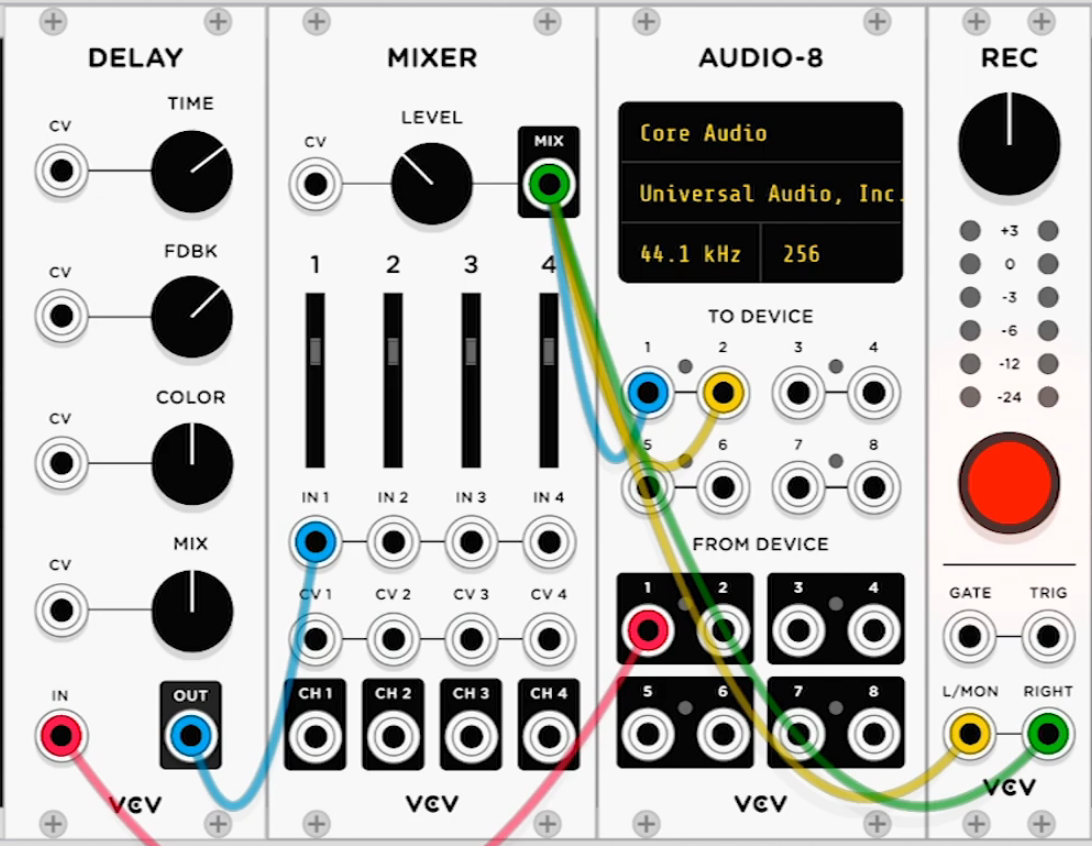
- Ring module: Bogaudio AM/RM ring modulator (+ VCO to control the ring module)
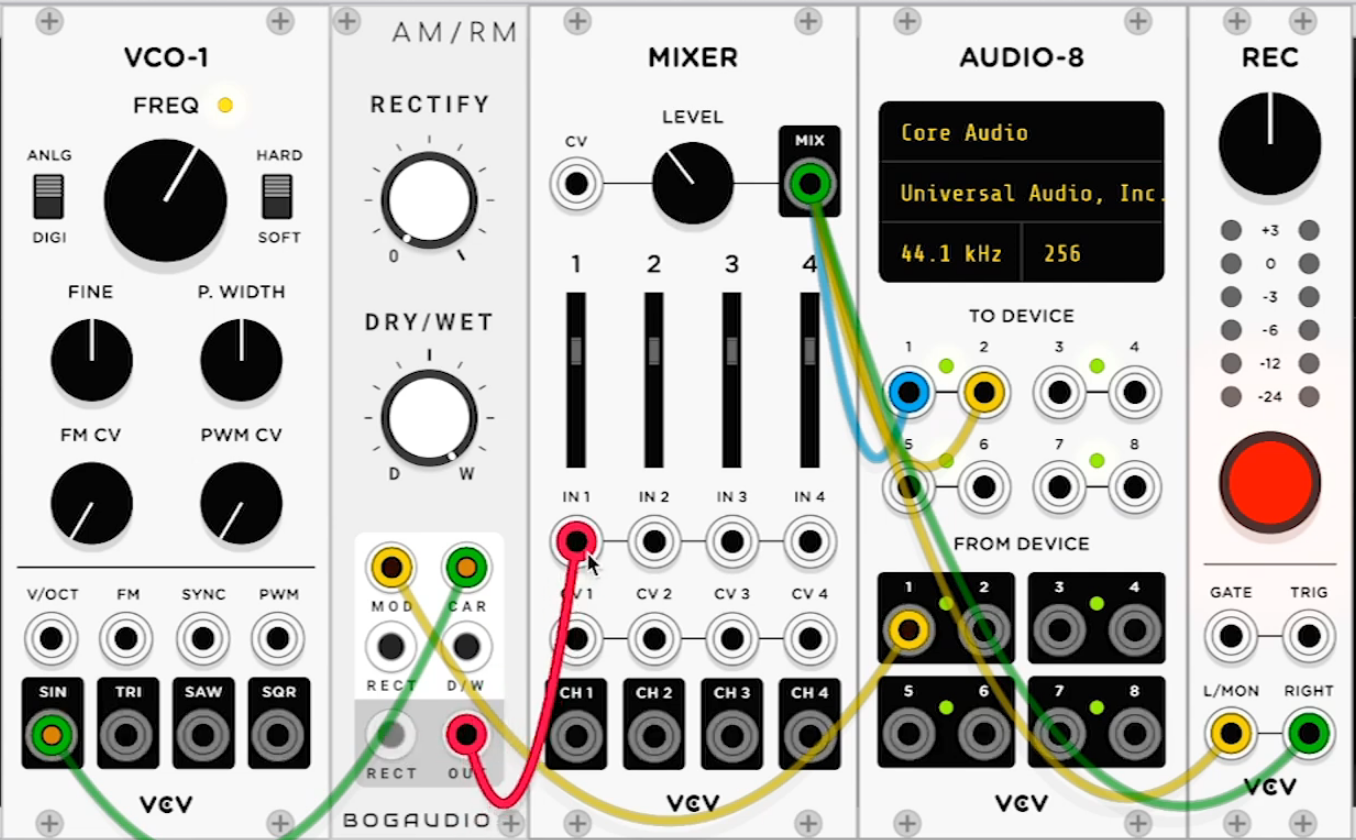
- Play around with changing the wave form from sine to square wave
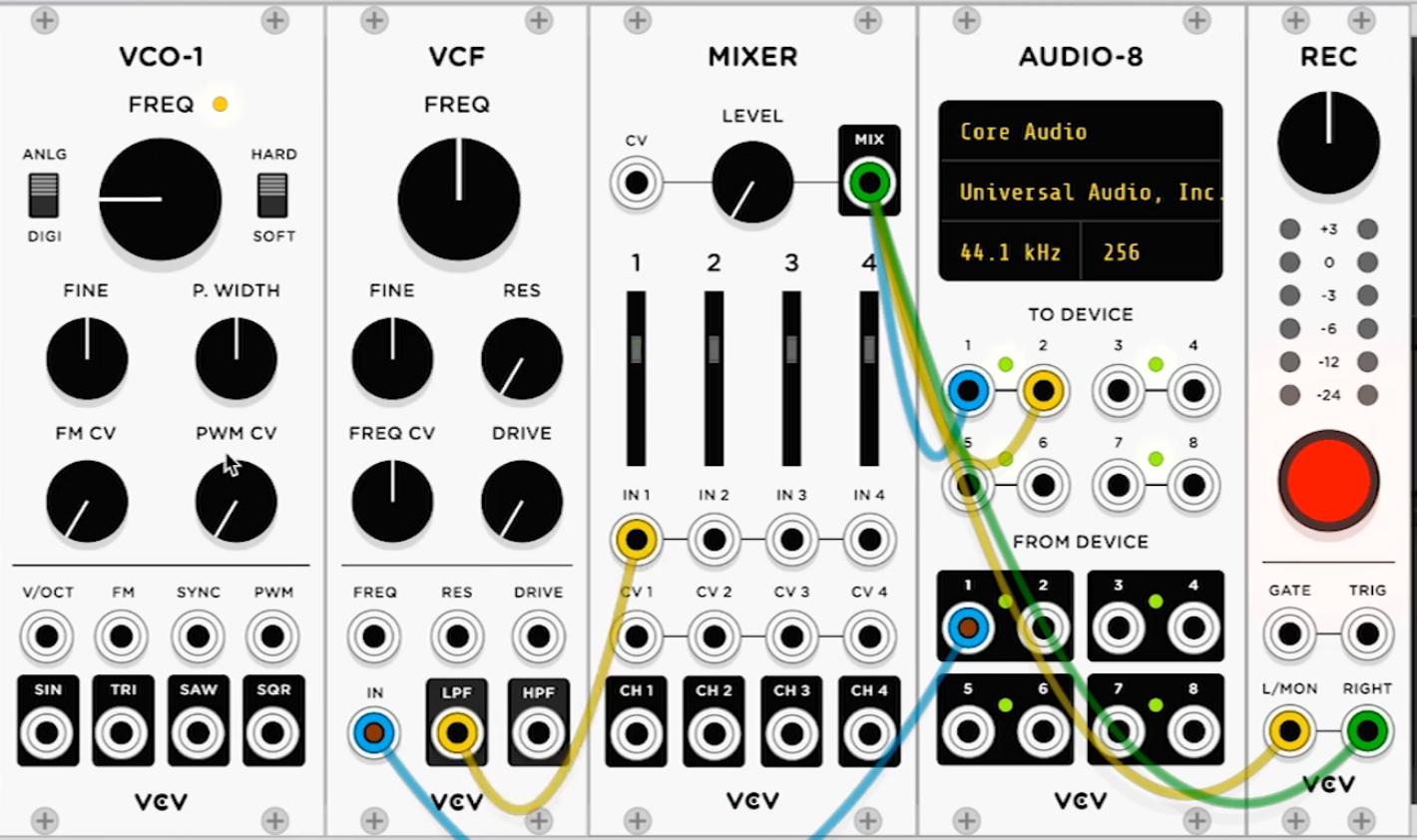
Demo 2: Filter FM
- Filter module: standard VCV VCF module
- Use the VCO to FM the filter
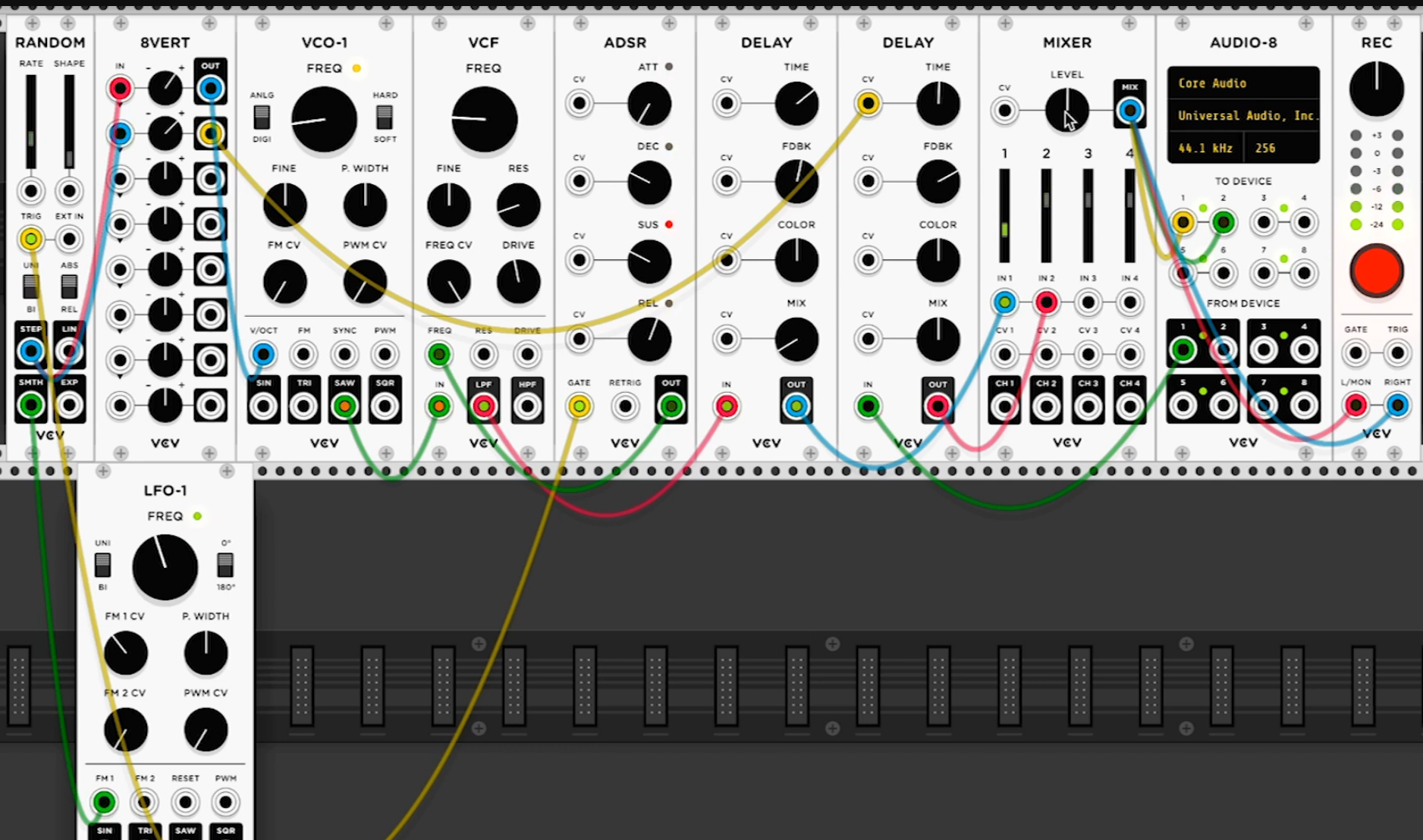
Demo 3: Adding modulation
- Random modulation of delay with a standard VCV Random module
2. Using external sound as control sources
Demo 1: Envelope followers
Tracks an incoming audio signal and produces a signal at its output that is analogous to the loudness of that incoming sound. Creates a very immediate and interactive connection between the acoustic instrument and the synth.
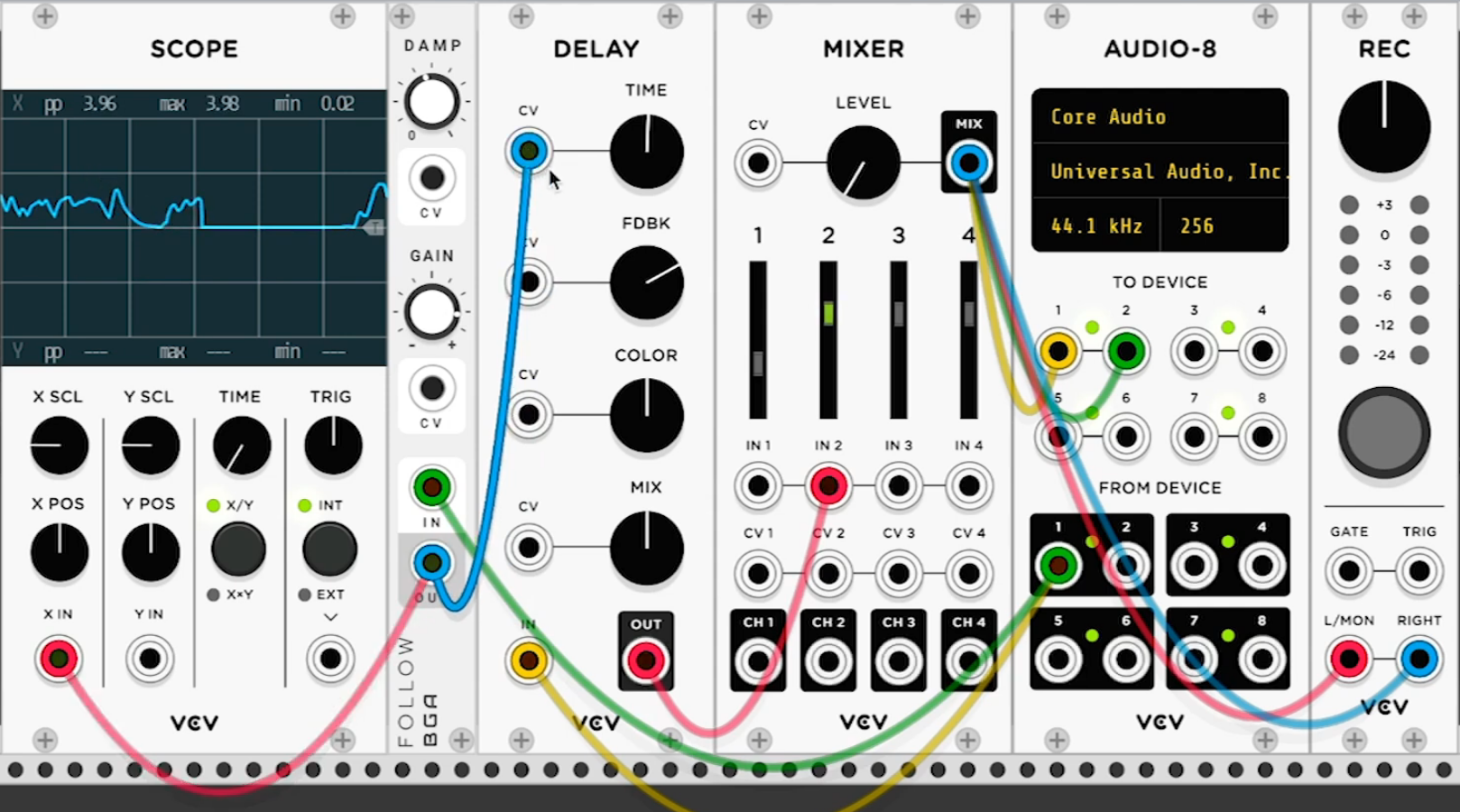
- Split the output of the external audio source into the delay module, and into the input of the Follow module (from Bogaudio).
- Plug the output of the Follow module into a scope, so we can follow the signal strength.
- Sensitivity of the envelope follower can be adjusted with the gain knob.
- Plug the output of the Follow module into the Delay module input, to modulate the delay time.
Demo 2: Onset detection
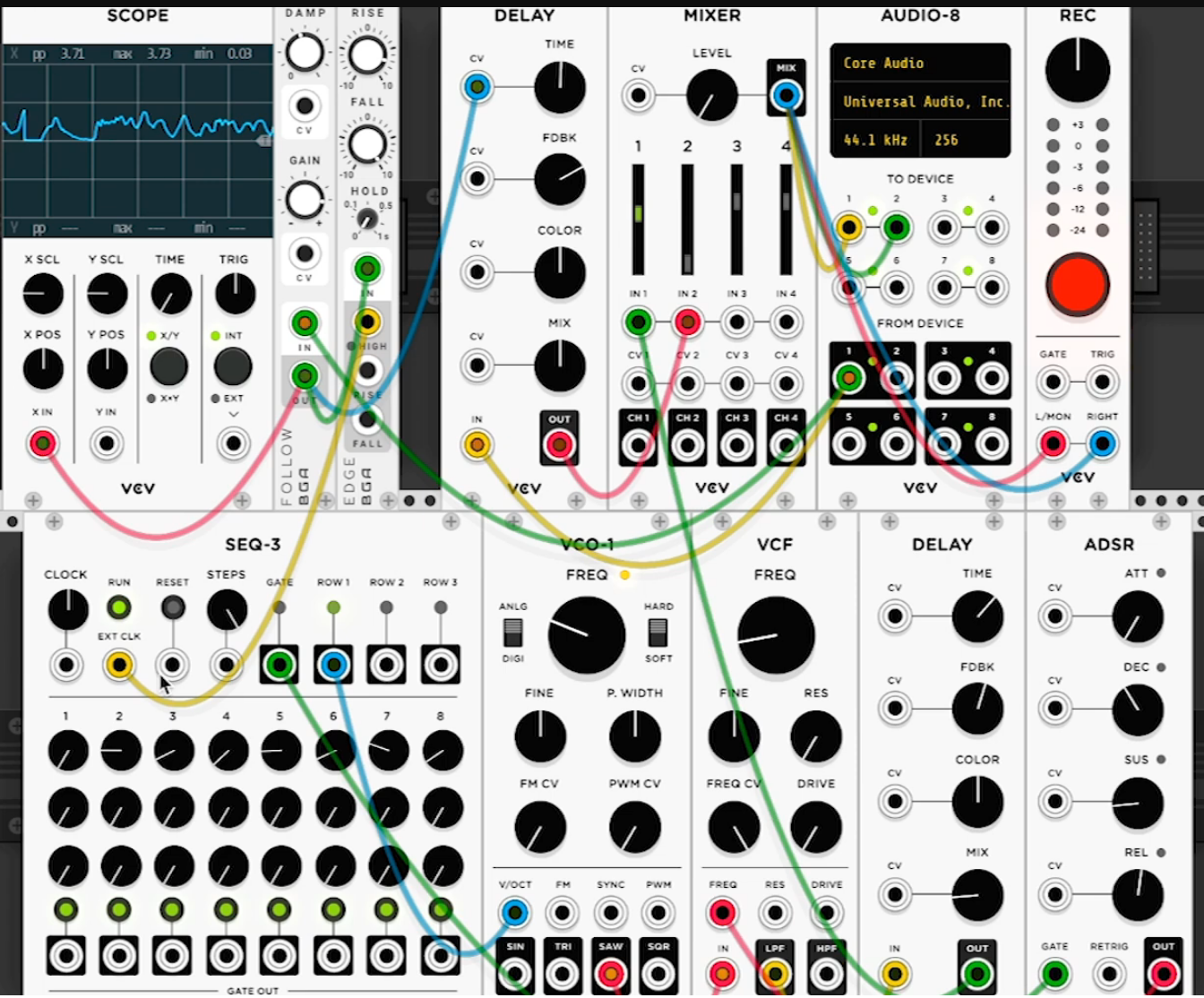
Pair an envelope follower with a comparator in order to create an onset detection.
- Comparator module Edge from Bogaudio.
- Good way to make the acoustic instrument and the synth patch really seem like they are connected together. Every time you make a new sound with the acoustic instrument, the patch will move forward.
- The clock for the sequencer is controlled by the comparator module.
- Dial the threshold of the comparator module in by using the RISE and FALL knobs. Now any time the incoming audio signal goes over the threshold it’s going to produce a gate at the output, and the sequencer is advanced.
3. Using VCV rack as a hub to connect to other hardware
Send the acoustic audio signal into VCV rack: envelope follower and comparator. VCO into sample & hold module. Then into a CVC-MIDI module to convert the control voltage into midi data.