1. Ethan Hein blog
Great blog with all kinds of articles to get started with music theory when playing guitar: https://www.ethanhein.com/wp/2015/music-theory-for-the-perplexed-guitarist/
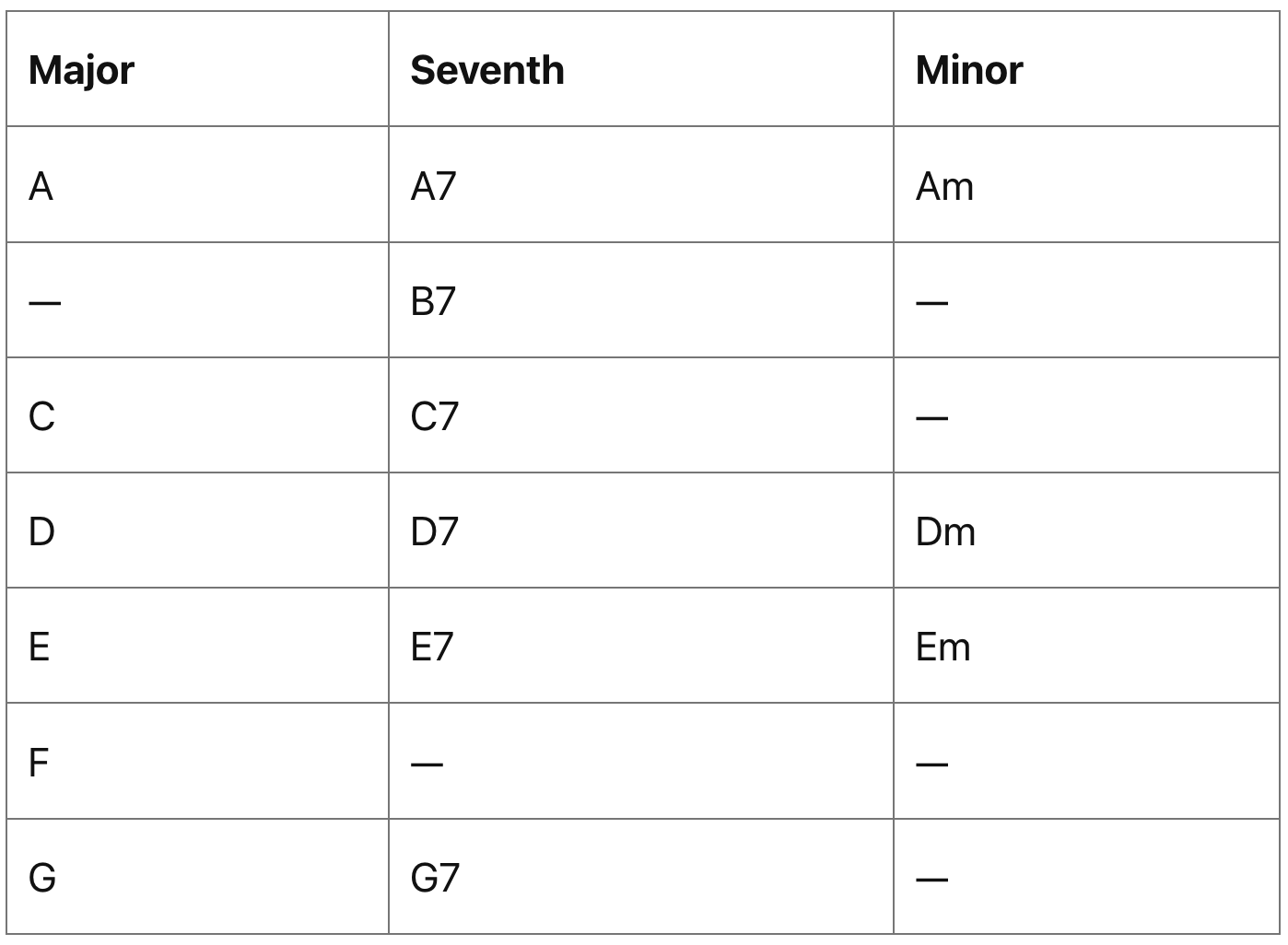
1. Standard 15 chords
https://www.ethanhein.com/wp/2010/music-theory-for-beginner-guitarists/
2. Pentatonic scale
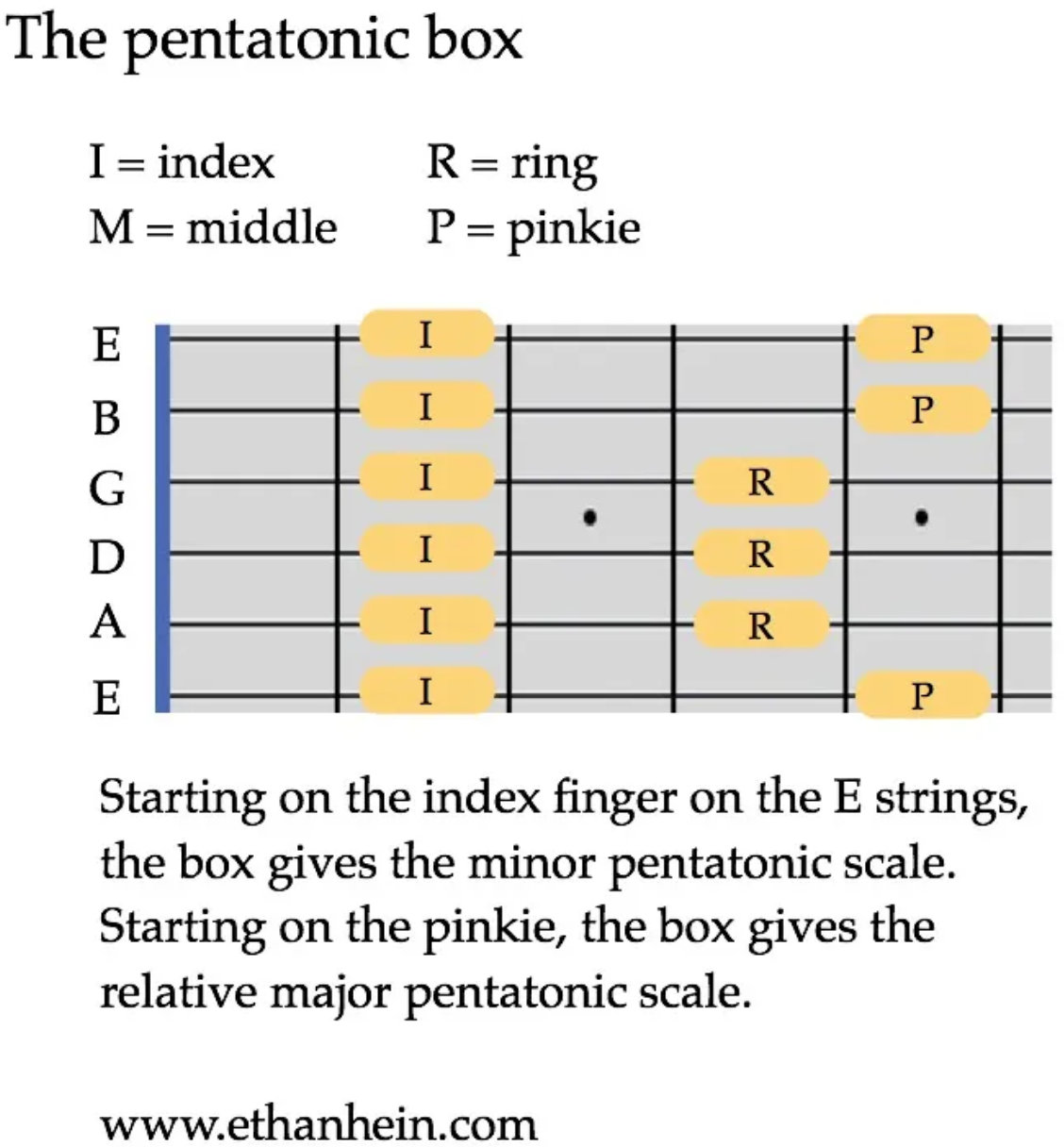
https://www.ethanhein.com/wp/2010/the-pentatonic-box/
Doesn’t have any dissonant notes in it, so you can’t really play anything “wrong”. Gets a little bland when overuused, but perfect for beginners.
C major pentatonic: = C major without 4th and 7th notes. C, D, E, G, A C minor pentatonic: = C natural minor without 2nd and 6th notes. C, Eb, F, G, Bb
Minor pentatonic scale
3. Blues scale
C, D, Eb, F, F#, G, Bb Forms the basis of blues tonality, which is a category distinct from major and minor, sharing aspects of both of them. The blues scale sounds good in any harmonic situation.
2. Andrew Clark video
https://www.youtube.com/watch?v=MrMTPG-Nzac
1. The 12 notes
…that make up Western music.
BC EF rule = no sharp or flat between BC and EF Half step (semitone): Distance from one note to the one right next to it. Whole step (whole tone): Distance of two half steps
2. The major scale
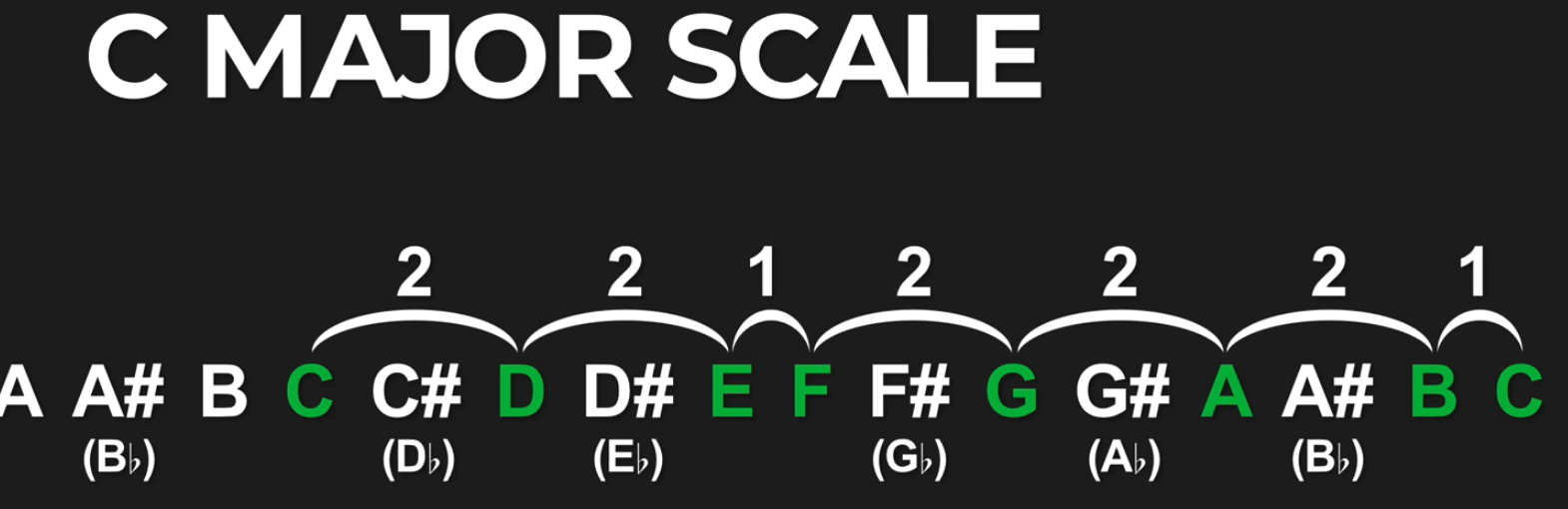
The major scale formula: W W H W W W H or 2 2 1 2 2 2 1 E.g. apply this formula to the C major scale:
Or for an A major scale:

3. Keys
Chords that sound good together. Keys just come from a corresponding major scale. E.g. key of C major comes from the C major scale. Formula to turn the major scale into a key:
- Give each note in the scale a number from 1 to 7
- Apply major/minor formula to show the chords in the key: Maj min min Maj Maj min dim
 Now you have the seven chords in the key of C major.
If you play all those chords in a row they all sound good together.
Now you have the seven chords in the key of C major.
If you play all those chords in a row they all sound good together.
You can use any combination of these chords to create a chord progression in the key of C major.
4. Relative scales
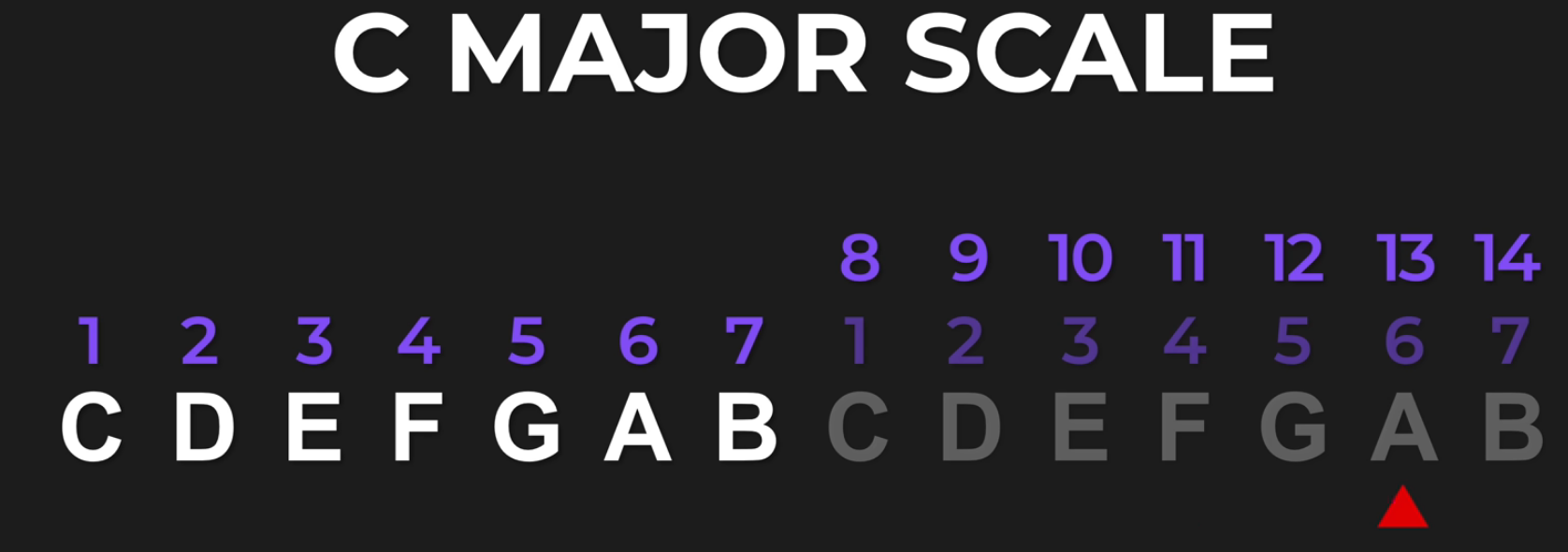
Have a different starting note, but contain all the same notes. Every major scale has a relative minor scale. Start at note 6. Play the exact same notes as in the major scale.
E.g. taking the C major scale, starting on the sixth note and playing all the notes from the C major scale gives you an A minor scale.
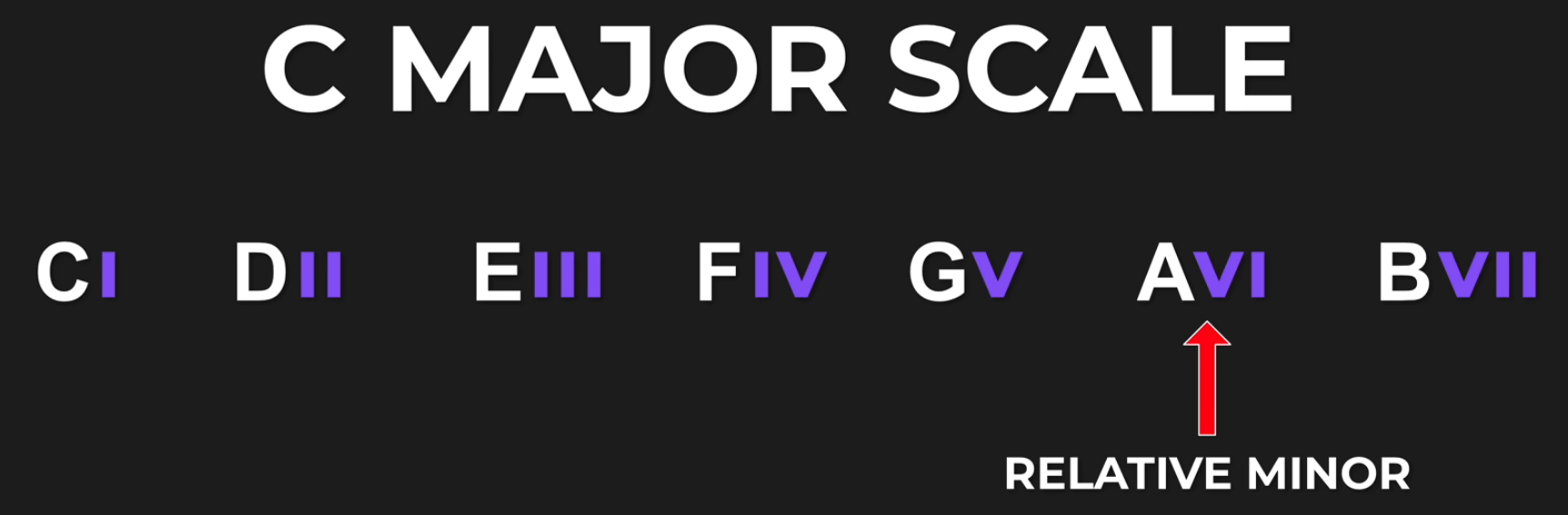
The notes haven’t changed at all, and the order hasn’t changed at all. It was just started at a different note. C major and A minor are relative scales containing all the same notes. Same for the key. The key of C major and the key of A minor contain all the same notes and all the same chords.
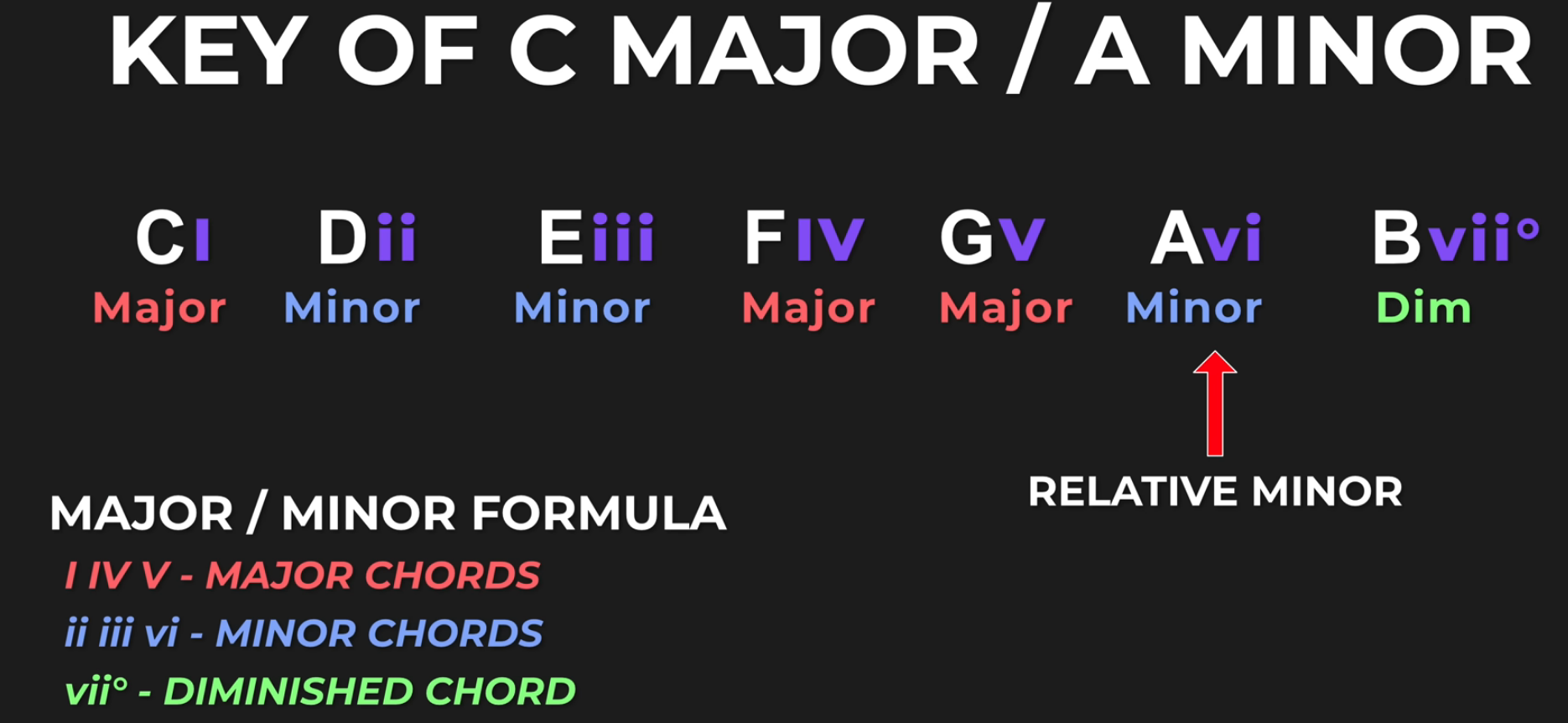
That’s true for other keys as well. Every single major key has its own relative minor key.
5. Intervals
Intervals = different distances between two notes. 1 note: minor second, half step, e.g. C - C# 2 notes: major second, whole step, e.g. C - D 3 notes: minor third, e.g. C - D# 4 notes: major third, e.g. C - E 5 notes: perfect fourth, e.g. C - F 6 notes: augmented fourth, diminished fifth, e.g. C - F# 7 notes: perfect fifth, e.g. C - G 8 notes: minor sixth, augmented fifth, e.g. C - G# 9 notes: major sixth, e.g. C - A 10 notes: minor seventh, e.g. C - A# 11 notes: major seventh, e.g. C - B 12 notes: perfect octave, e.g. C - C
In a C major scale: C - major second D - major third E - perfect fourth F - perfect fifth G - major sixth A - major seventh B - perfect octave C
6. Chords, triads
Triad = group of three notes that make up the core of the chord 4 types of triads: major, minor, augmented, diminished Each one of these triads makes use of a different set of intervals.
Major triad: root - major third - perfect fifth, or 1 - 4 - 7 half steps, e.g. C - E - G Minor triad: root - minor third - perfect fifth, or 1 - 3 - 7 half steps, e.g. C - D# - G Augmented triad: root - major third - augmented fifth, or 1 - 4 - 8 half steps, e.g. C - E - G# Diminished triad: root - minor third - diminished fifth, or 1 - 3 - 6 half steps, e.g. C - D# - F#
There are more chords, and they are formed by changing or adding other intervals. 7th chords E.g. C major 7: still contains C major triad but also contains a major seventh interval, i.e. 11 half steps. C - E - G - B
Suspended chords (sus) Get rid of the major 3rd and replace it with a major 2nd or perfect 4th. I.e. replace 4 half steps with either 2 half steps or 5 half steps. E.g. A major: A - C# - E A sus2: A - B - E A sus4: A - D - E
Since these suspended chords don’t have a major or minor third, they don’t have a major or minor sound.
Extensions (9, 11, 13) 9 = same as major second 11 = same as perfect fourth 13 = same as major sixth