Indoor plant advice
Watering
Overwatering is a much bigger indoor plant killer than underwatering. Plant roots need oxygen, and too much water prevents that. Stick your finger into the soil and only water when it feels dry 2 cm down. If not, come back in a few days and re-check. Exception here is Calathea: they like it damp, but never wet! Youtube: I Stopped Killing Calathea Once I Knew This
And when watering, drown them properly in water and make sure it can drain well. Don’t do little dribbles every few days.
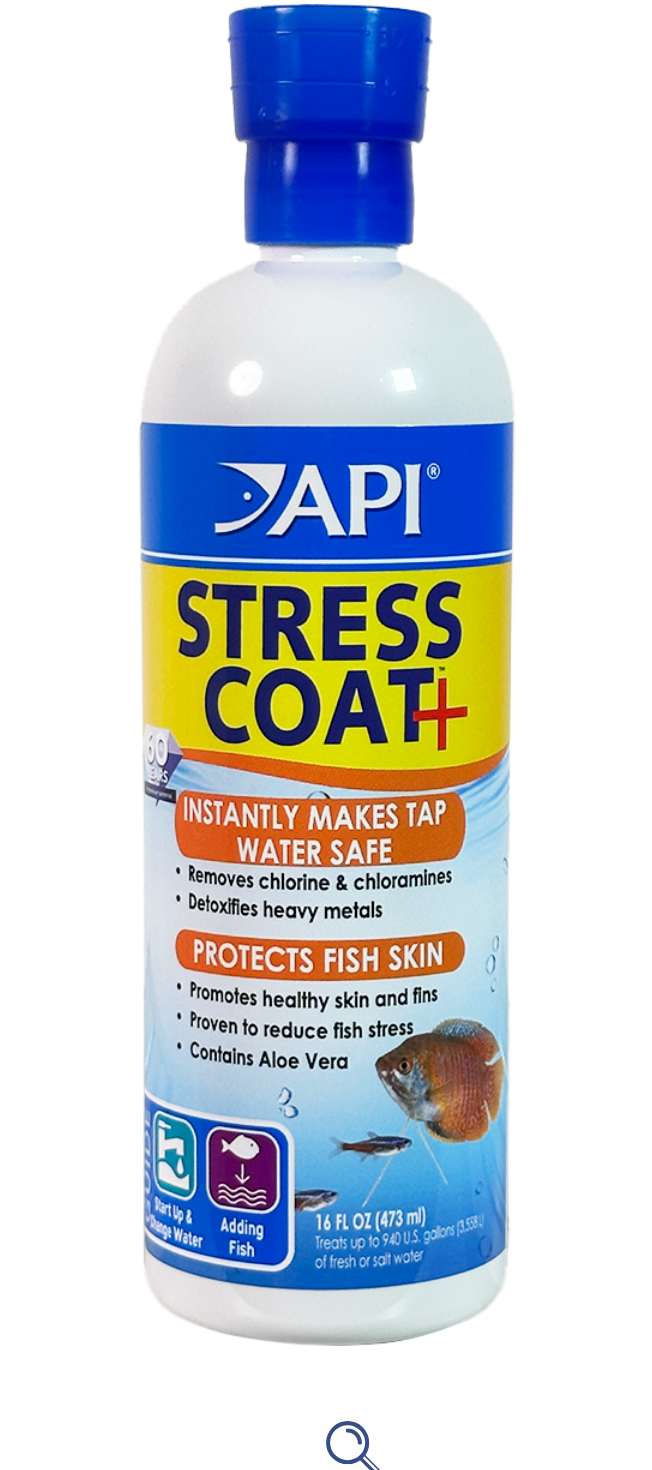
Water quality is also important. Chlorine will slowly kill your (sensitive) plants. Use a chlorine remover for aquariums (like this one: https://www.apifishcare.com/product/stress-coat) to treat your water.
Soil
Youtube: Why You Should NEVER Use Soil Indoors Never use only soil or compost!! Soil and compost is very compact, and gets even more compacted when wet. Plant roots won’t get enough oxygen ⇒ root rot.
Always add Perlite! Or bark, sand, coconut husk, Vermiculite, etc. They create air pockets in the soil mix so we don’t suffocate the roots (Vermiculate also retains some moisture).
Tropical plants usually like 30% perlite to 70% compost. Cacti and succulents like 1/3 perlite, 1/3 compost and 1/3 sand.
Bark or coconut husks are great for Monstera, Philodendron and Alocasia, anything with air roots. They like “chunky” airy soil.
Best is to ditch compost/soil entirely and just use coconut coir. Coconut coir helps retain moisture but also provides great drainage and aeration. Mix it with perlite, and that’s perfect for most indoor plants. Compost can introduce mould very easily. Inside with high moisture and temperature, lack of air flow, etc. the mould can take over quickly. Also, gnats are more likely when using compost. Downside of coconut coir is that it is quite inert and doesn’t hold on to nutrients. So you have to fertilise well.
Fertiliser
- Half strength, every week, low phosphorus, high potassium for flowering: hibiscus
- Quarter strength, balanced (10-10-10), every week: pilea, pothos, turtle vine
- Quarter strength, once a month max: jade plant, Zamioculcas.
- Even less: Snake plant
- Even less: succulents (flaming katy) Hungry plant: Hibiscus Make quarter strength fertiliser
Pest control
Neem oil is best. https://justhouseplants.com/neem-oil/
Here’s how to mix a neem oil spray to treat houseplant pests:
Mix together in a spray bottle the following ingredients:
- 3 cups warm water
- 2 tablespoons neem oil
- 1 tablespoon dish soap
Shake the ingredients together in your spray bottle very well. Remember that neem oil can’t be stored in a spray bottle once it’s mixed, and will deteriorate very quickly, which will render your spray bottle useless and unsalvageable. Clean out or use up any excess spray after use; you can even spray out the rest in flower beds or nearby your windows to repel other insects.
Spray plants with light infestation once a week, or twice a week if it’s more severe.
Plants I have
Dracaena, corn plants, Dracaena fragrans, Dracaena Janet Craig
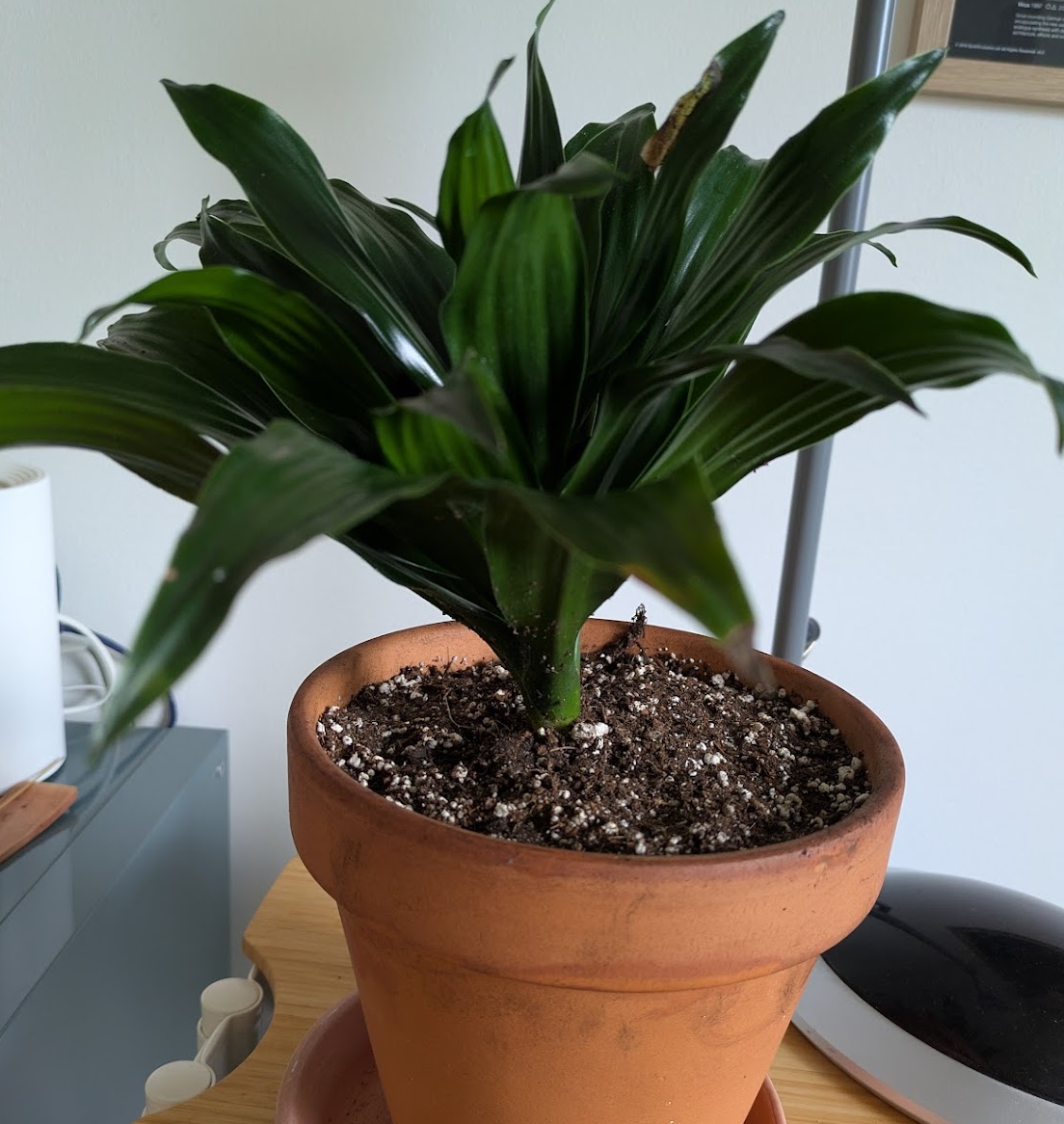 Janet Craig dracaena. Slow-growing African cultivar.
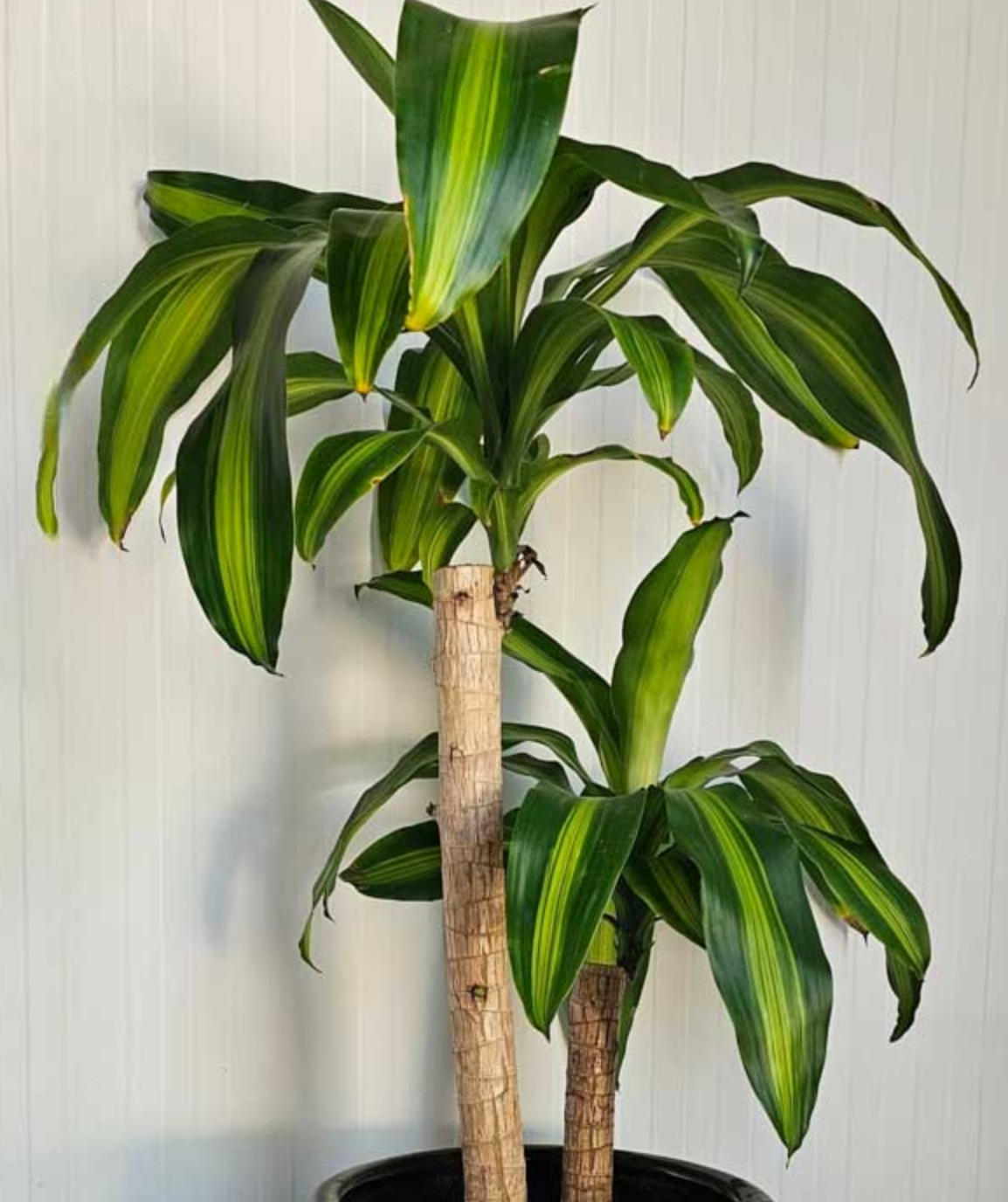 Cornstalk dracaena. Dracaena fragrans
- A lot of different varieties, with grass-like or spear-like leaves, and thick cane-like stems.
- Need:
- Bright, indirect light.
- Moist, well-drained soil.
- Let dry out completely, then throroughly water through.
- Fertilise monthly.
- Avoid:
- Overwatering in winter. In dormant period, let the soil dry out a bit.
- Long exposure to direct sunlight (leaf scorch!).
- Can adapt to low-light environment.
- Contain saponins, which are toxic to pets.
- Tolerate cutting back if necessary for shape.
- Repot into a slightly larger container when the plant starts to visibly outgrow its pot or when roots start to emerge through the drainage holes.
Dieffenbachia seguine, dumb cane, leopard lily, prikblad, Giftaron
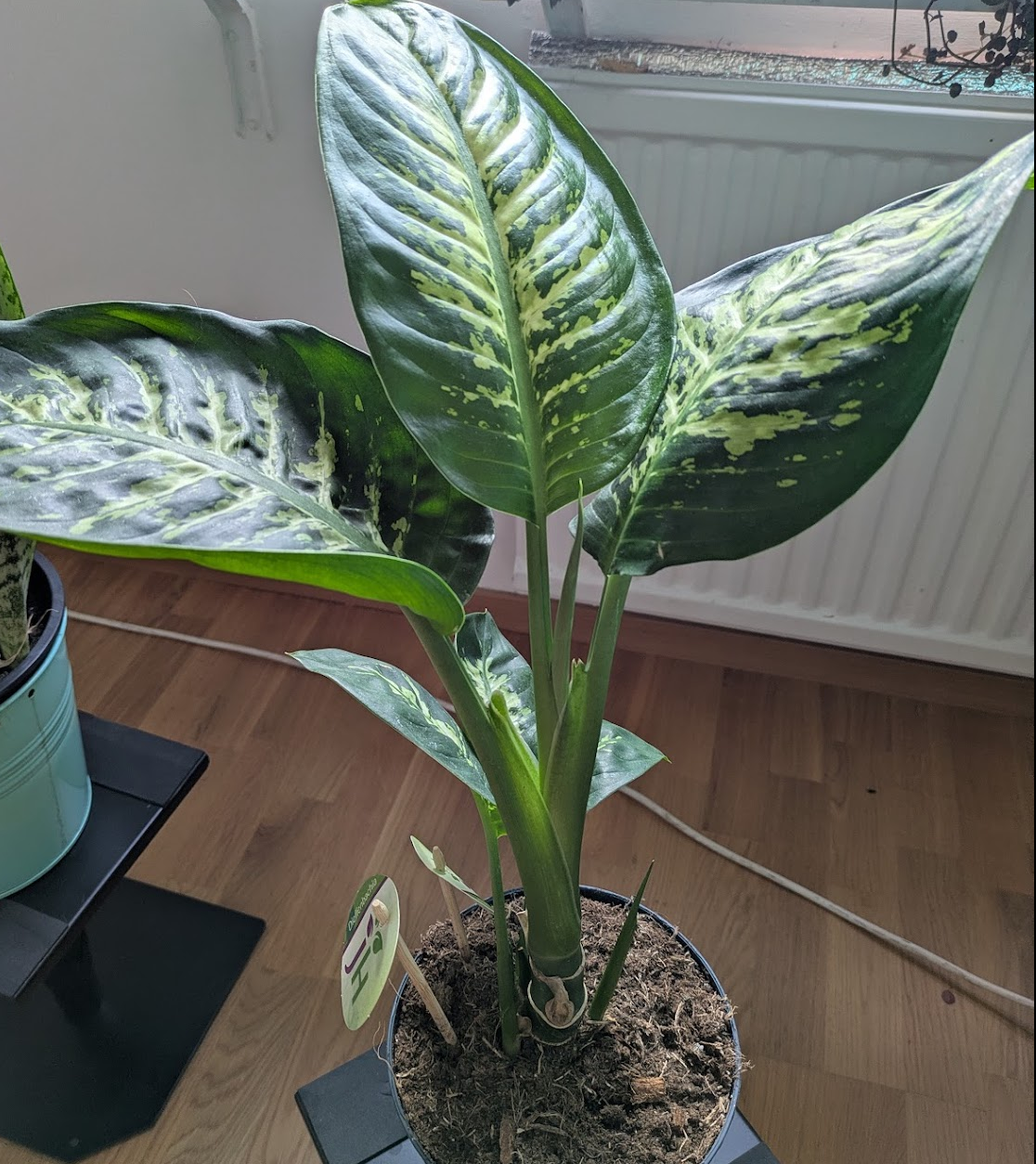
The sap is toxic; the entire plant contains a high concentration of calcium oxalate crystals which may produce negative side effects if ingested, potentially ranging from anaphylactic shock and to even death.
- Good beginner plant.
- Very adaptable, forgiving, and low-maintenance.
- Needs:
- Bright, indirect light
- Evenly moist soil. Well draining soil. Provide higher-than-average humidity levels to get the best out of this plant.
- Fertilize sparingly monthly during the growing season.
- Avoid:
- Full sun spots, as this can lead to leaf scorch.
- Soggy soil.
- You can also trim off the top of a tall, top-heavy plant when the base of the main stem is getting bare. This helps prevent the plant from falling over and encourages a more attractive form.
- Easy to propagate by root division, but wear gloves. Do it in the spring or when repotting.
- Fast-growing, up to 1.5m. Need repotting every 1-2 years.
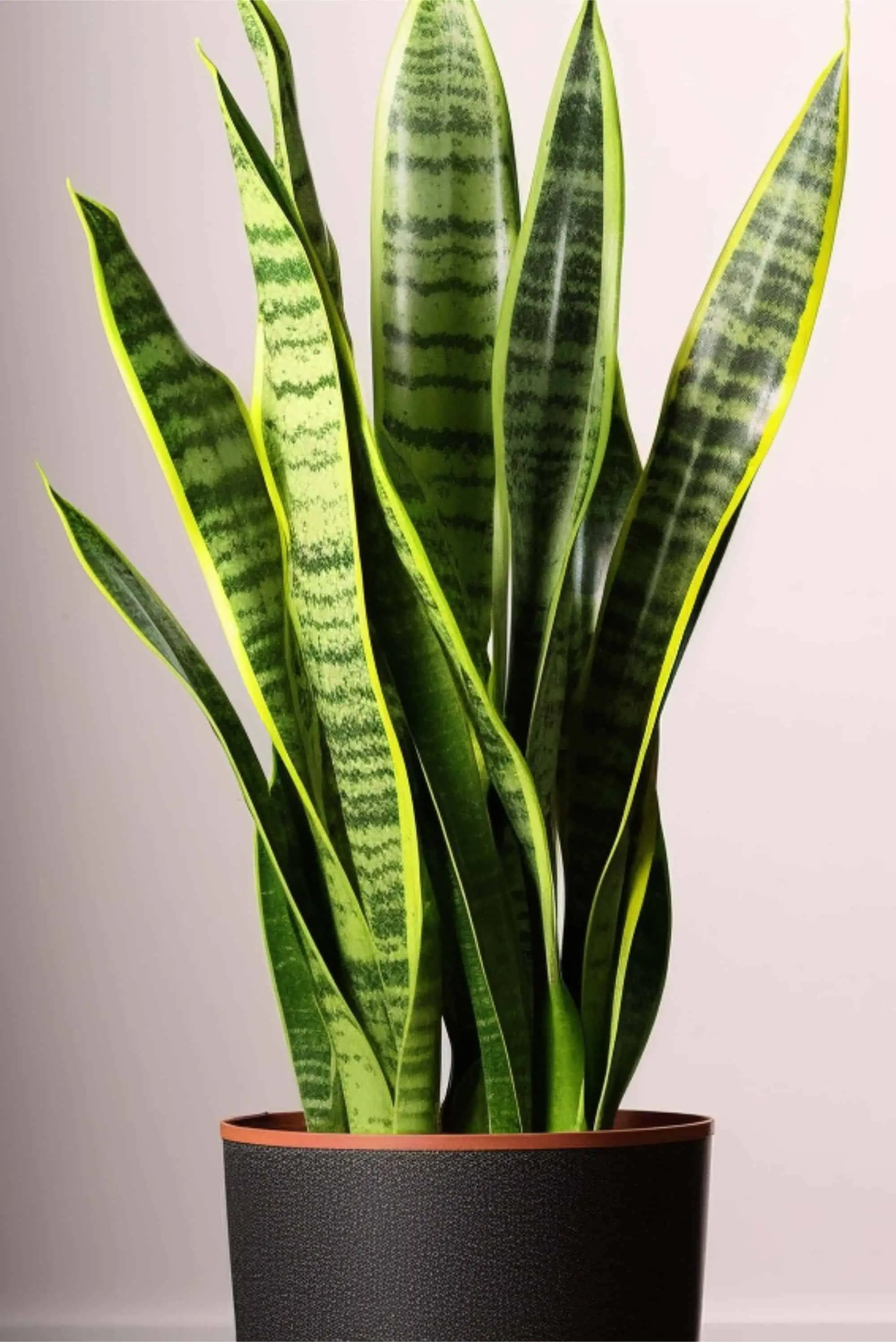
Snake plant (Dracaena trifascinata, Sansevieria trifasciata, svämors tunga)
Hardy house plant that thrives in varying light conditions.
- Needs:
- Sun to partial shade. Can tolerate a few hours of direct sunlight. Can also handle low-light conditions, but not much growth then. Best: place near a window.
- Sandy, well-drained soil.
- Water when soil has dried out completely, every 2 weeks or so, but then water thoroughly.
- Repotting every 3-5 years, in spring.
- Avoid:
- Over watering!! The quickest way to kill a snake plant.
- Cold draughts. Won’t tolerate frost.
- Too much fertiliser.
- Fertilise sparingly. Quarter strength fertiliser every 2 months only during spring and summer.
- Can survive weeks without watering.
- Yellowing leaves are a sign of overwatering.
- Can be propagated by dividing or leaf cuttings.
- Pruning: To encourage new growth, prune during growing season. To control height, remove the talles leaf at the soil line.
- Wipe dust off the plants regularly.
- Prefer wide, shallow bowls with lots of drainage holes.
- If leaves are falling over or drooping, reduce watering and move the plant to a sunnier spot. Or replace soil with a better draining mix.
Peace lily (Spathiphyllum spp., fredskalla, Scheidenblatt, Friedenslilie)
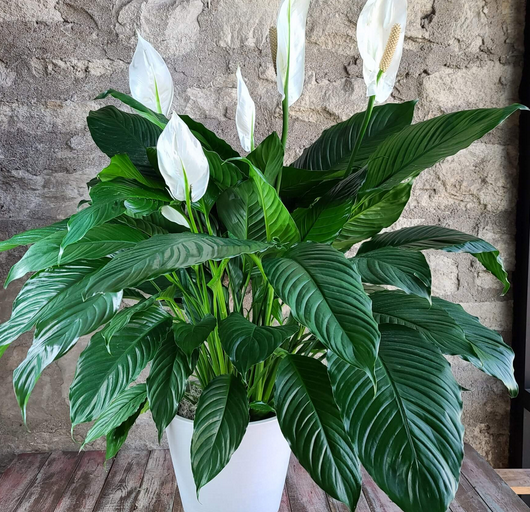
Can live for over 20 years.
- Toxic to humans and pets.
- Needs:
- Well drained and rich, moist soil. Prefers underwatering to overwatering.
- Bright, indirect light.
- Frequent fertilisation during summer with a 20-20-20 fertiliser.
- Happiest when somewhat root-bound.
- Avoid:
- Cold draughts.
- Propagate by dividing clumps.
Philippine Evergreen (Aglaonema commutatum, poison dart plant, silverkalla)
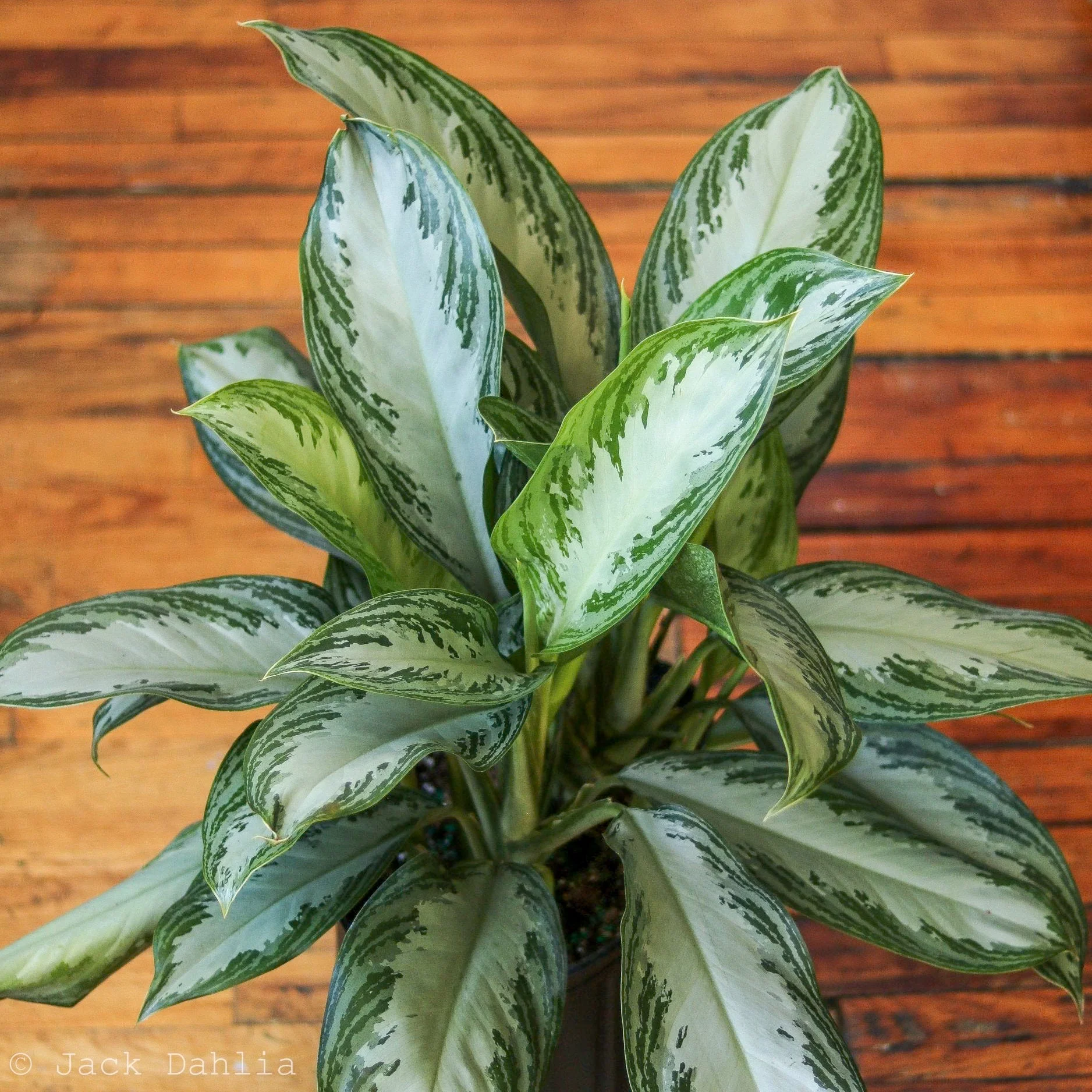
Easy-to-care houseplant, grows quickly, tolerant of low light, survives drought periods.
- Needs:
- Enjoys evenly moist soils. Water every 1-2 weeks, and a bit less in winter.
- Well drained soil. Mix perlite or orchid bark into the soil.
- Indirect light
- Pruning twice a year in late spring or summer to keep the plant healthy and attractive.
- Avoid:
- Direct sunlight
- Can be propagated from cuttings, but needs root hormone: https://justhouseplants.com/propagating-aglaonema/
Baobab tree (Adansonia digitata)
Adapted to hot, semi-arid climates, so their indoor care looks quite different from typical foliage plants.
- Needs:
- As much direct sun as you can give it.
- Warm temperatures (20-30C).
- Water thoroughly when the soil has dried out during the growing season spring and summer, then cut back drastically in autumn and winter.
- Use a very free-draining mix — a cactus/succulent blend, or standard potting soil cut with perlite and sand.
- Avoid:
- Cold temperatures (<10C). Baobabs have not cold tolerance.
- Over watering during dormant season (autumn, winter).
- Baobabs go dormant and often drop their leaves in winter — this is normal, not a sign of dying.
- Baobabs can store water in their trunks and only need to be watered about once a month during the growing season. When they are dormant, don’t water them at all. Too much watering can cause root rot and kill the tree. Keep bone dry during winter. Exception: If the tree is kept in a warm environment (>20°C) with strong artificial light, it may retain foliage. In this case, water sparingly—just enough to keep the fine roots alive, but never to saturation.
- Fertiliser: Light feeding only, diluted cactus or balanced fertilizer, during the growing season. None in winter.
- Happier when slightly root-bound, so don’t give it a too big pot.
- Best soil for baobabs: 100% inorganic, coarse-particle mix. 33% pumice, 33% calcined clay, 33% coarse sand. This inorganic mix allows for ‘luxury watering’ during the growing season without the risk of saturation, as the water drains immediately, leaving only the moisture held within the porous particles. Doesn’t hold much nutrients though, so needs fertilising during growing season.
- In a gritty, inorganic mix, watering may be required every 1-3 days depending on ambient heat. The goal is a ‘wet-dry cycle.’ The substrate should approach dryness before re-watering, but extreme desiccation during the growing phase will check growth and induce premature dormancy.
- Pruning: To create a canopy, the main leader must be pruned (chopped) aggressively. Best in late spring.
- Insect pests: Spider mites are the most common pest of indoor baobabs, thriving in the dry air of heated homes. They cause stippling (tiny yellow dots) on leaves and fine webbing. Control by increasing humidty, washing foliage regularly, and applying neem oil (though avoid the oil in direct sun!).
Monstera (Monstera deliciosa, Swiss cheese plant, split-leaf philodendron. Fensterblatt)
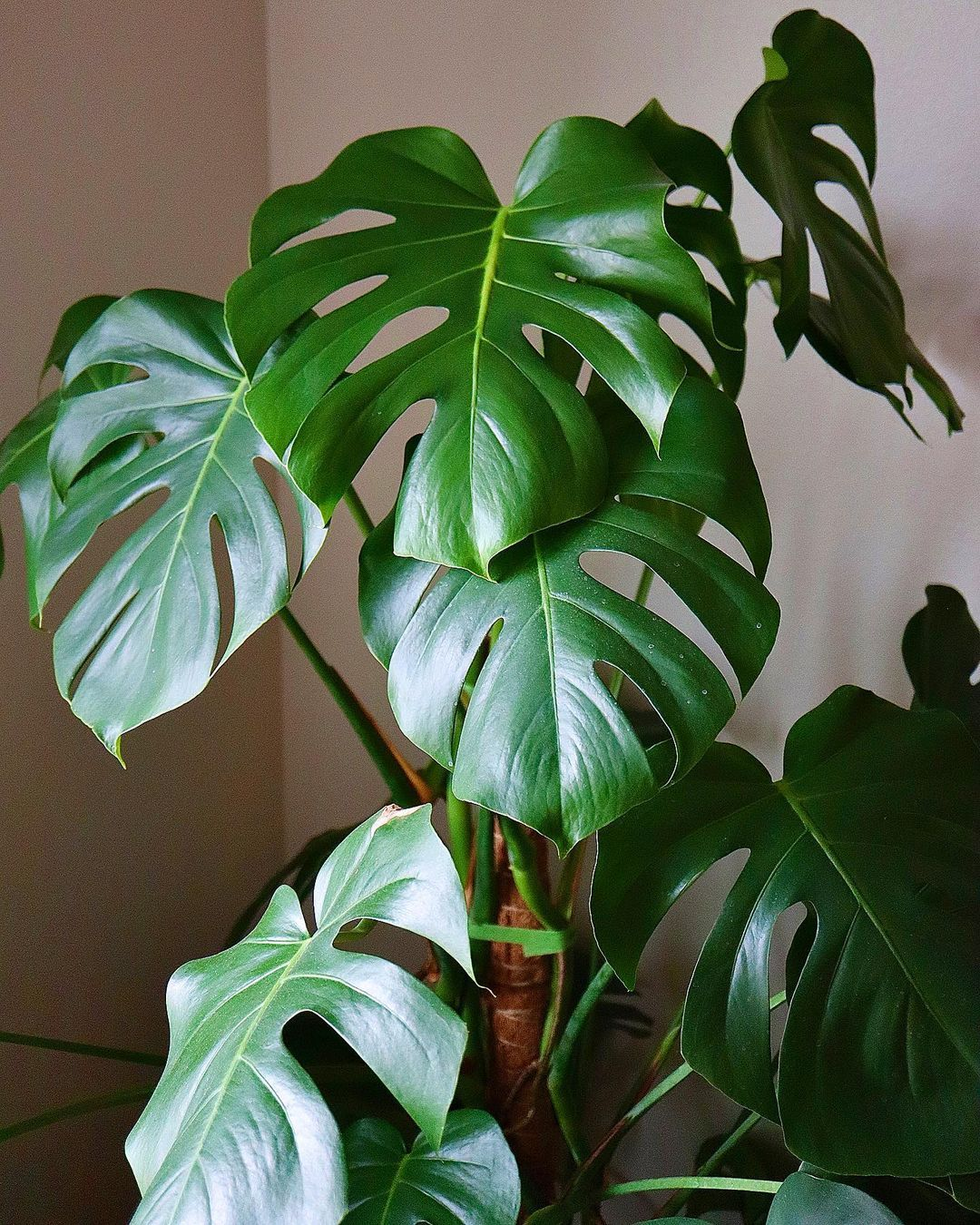
- Toxic to humans and pets.
- Needs:
- Partial sunshine or dappled light.
- Well drained soil. Potting soil or peat mix. Mix 3 parts indoor houseplant soil, 2 parts shredded bark, and 1 part perlite.
- Regular watering. Evenly moist. When the first inch of soil is dry, water it deeply until water runs out of the drainage holes.
- Water less in winter than in summer.
- Warmth and humidity.
- Balanced fertiliser every week during growing season.
- Moss pole to grow up on.
- Repotting every 2 years.
- Avoid:
- Direct sunlight.
- Propagated with stem cuttings. Make sure you cut off a stem that includes a node, an aerial root, and at least two leaves.
- Wipe dust off the leaves regularly.
- Yellow leaves are an indication of dry soil. The oldest leaves will turn yellow first.
Succulents
Use succulent soil, or mix: equal portions of coarse sand, perlite, and potting soil.
Flaming katy (Kalanchoe blossfeldiana)
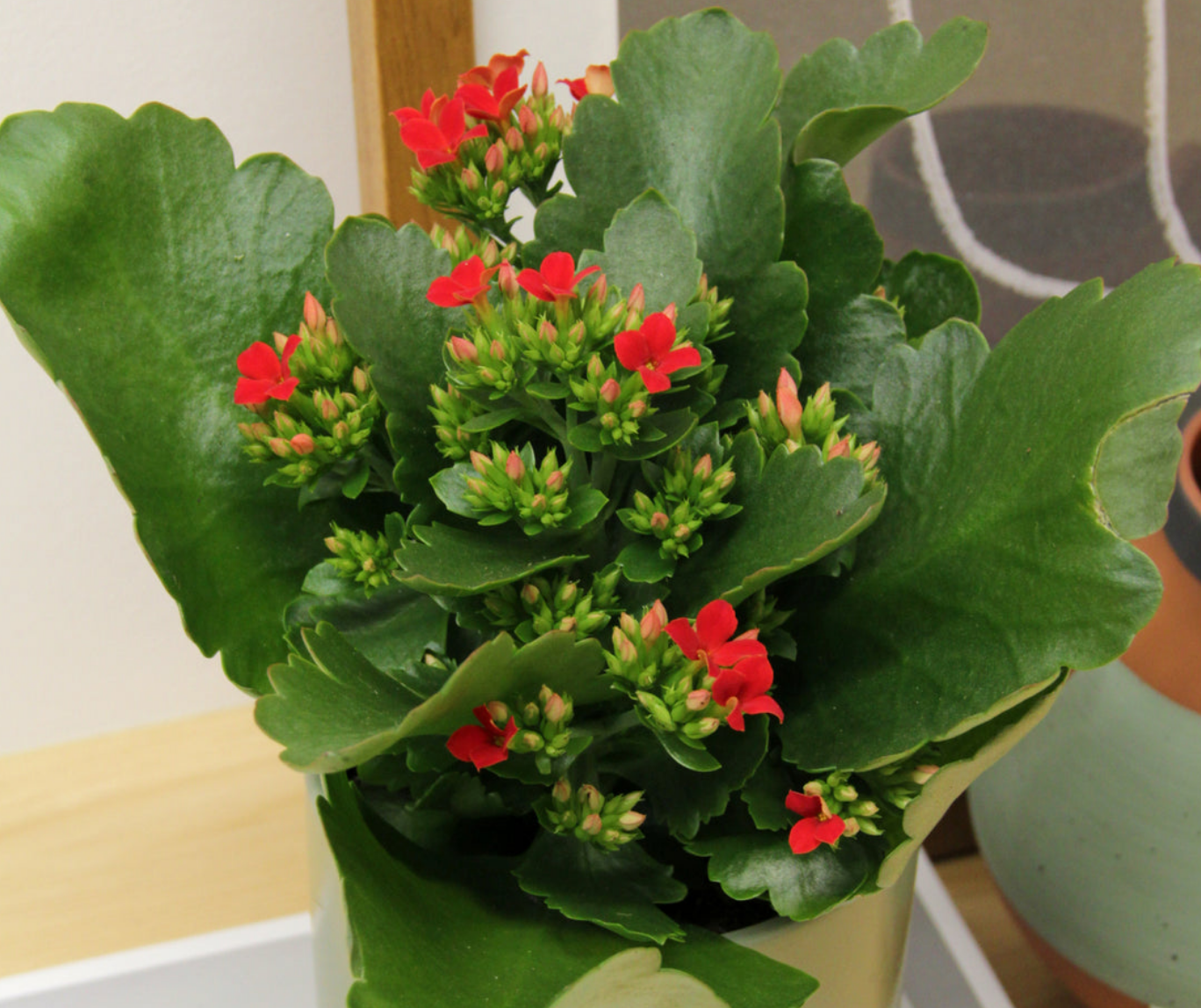 Compact, winter blooming.
- Needs:
- Bright indirect light.
- Well draining soil.
- Avoid:
- Over-fertilising.
- Over watering. Susceptible to root rot.
- Frequent repotting or pruning.
- Direct sunlight can burn the leaves.
- Flowers in times of long nights.
- Fertilise only very little every 2 months during growing season.
- Easy to propagate by stem cuttings or offsets.
Sempervivum calcareum (house leeks)
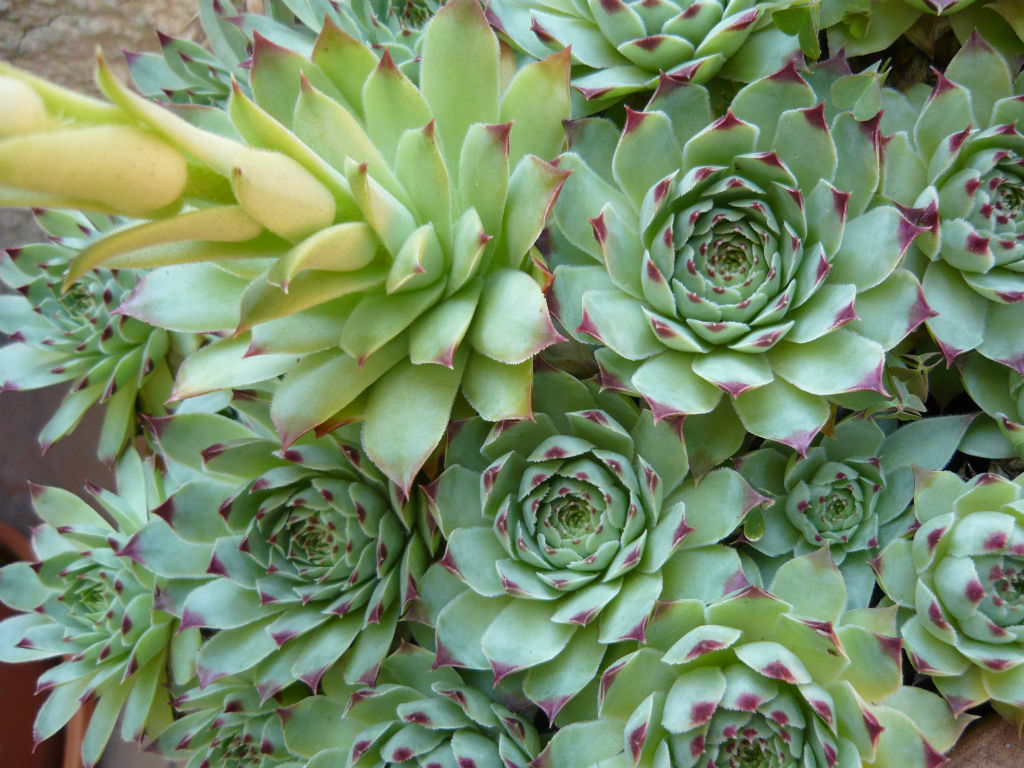 Native to the southwest Alps.
- Sempervivums are not difficult to grow, provided they are not waterlogged and killed by excess watering.
- Sempervivum earned its popular name, “Hen and Chicks,” from their growth habit. The mother plant, or hen, sends out numerous offsets that cluster around her base like chicks.
- Can be grown outdoors and in containers, survives very cold winters. Among the most frost-resistant succulents, making them popular garden plants. Can also be grown in cold windows. They also like to grow on roofs of houses in Europe.
- Need:
- Full sun.
- Well draining soil
- Water regularly during growing season, but make sure the soil dries out completely in between.
- Very low watering during winter.
- Avoid:
- Over watering. Never let water sit on the rosette.
- Don’t need fertilising, or only very little during growing season.
- Propagated by separating offsets, in spring or summer.
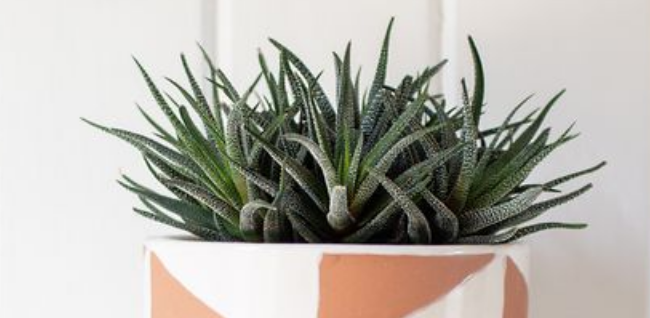
Haworthia (zebra cactus)
Slow growing succulent.
- Need:
- Bright light.
- Temperatures around 20C.
- Sandy, well drained soil.
- Water whenever the top inch of soil has dried out during spring and summer, but ensure the soil is never waterlogged. Reduce watering to just enough in the fall and winter to keep the leaves plump.
- Adequate summer moisture, and dry in winter.
- Avoid:
- Over watering
- Never allow water to collect in the rosette; this can lead to rot.
- Cold temperatures
- Fertilising during autumn and winter
Turtle vine (Callisia repens, )
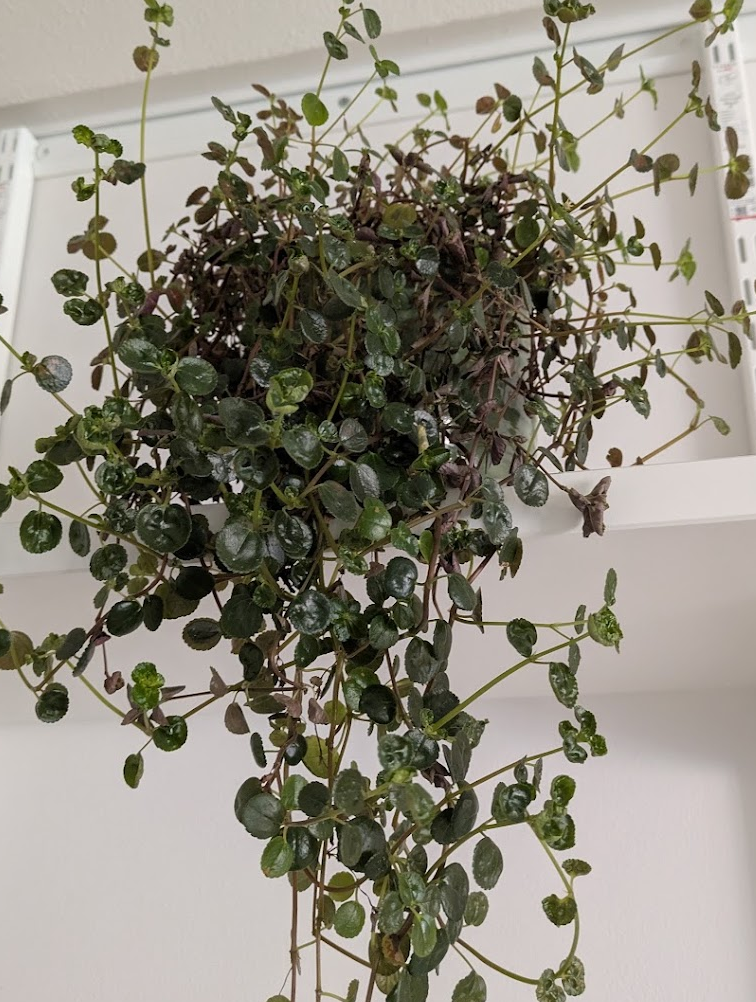 ‘Pink Lady’ variety with pink tips (gets lost in low light conditions).
- Fast, sprawling growth that easily puts down roots where the vines touch soil. Good for ground cover or cascading down a pot.
- Succulent, low maintenance. Prefers pots made of terracotta for better drainage and air flow.
- Doesn’t grow very high.
- Needs:
- Bright, indirect light
- Regular watering, but let the top cm dry out. Once a week approximately. It does like consistently moist soil.
- Light fertilising, e.g. quarter strength every week during spring and summer. Despite vigorous growth, they are not heavy feeders!
- Repotting every 2 years.
- Avoid:
- Too low light. Indications: long stems, dropping leaves.
- Too much direct sunlight. Indications: scorched leaves.
- Tolerates pruning well, e.g. leggy stems. Best done in spring or summer when it’s growing a lot.
- Easy to propagate:
- Identify a 2-inch section of stem you wish to remove.
- Make a clean cut with garden pruners or a knife.
- Remove the bottom inch of the leaves to allow for proper root development.
- Place the bare end into the soil and lightly pack the soil around the stem.
- Moisten the soil lightly and place it in a warm location.
Zamioculcas (Zamioculcas zamiifolia, zz plant, zamiakalla, garderobsblomman)
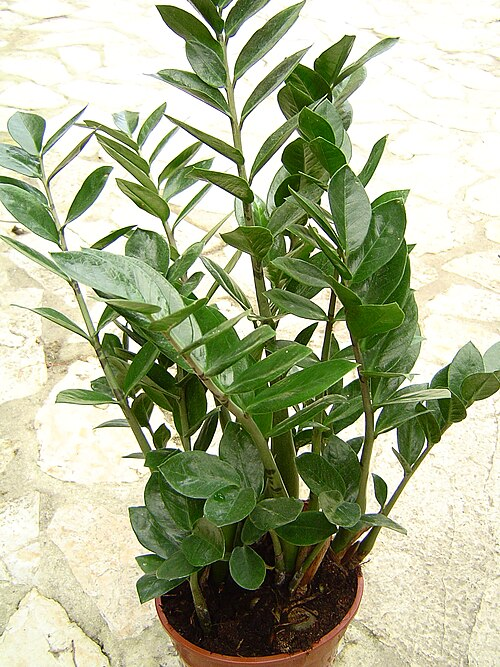 Tropical herbaceous perennial plant. Succulent.
- Tough, drought tolerant. One of the easiest indoor plants.
- It grows from thick, potato-like rhizomes hidden under the soil, which store water and energy. And this is why it’s so resilient (and why overwatering is the biggest mistake people make).
- Needs:
- Bright, indirect light, but can also tolerate very low-light conditions.
- Little watering. Let it dry out completely in between watering.
- Avoid:
- Overwatering can lead to root rot.
- Too much bright, direct light.
- Can be propagated by leaf cuttings. The lower ends of detached leaves are inserted into moist growing medium. Leaf may decay, but a bulb-like structure forms that can grow a new plant. Process may take up to a year.
- Fertilise little, e.g. quarter strength, once a month.
Golden Pothos (Epipremnum aureum, Efeutute, gullranka)
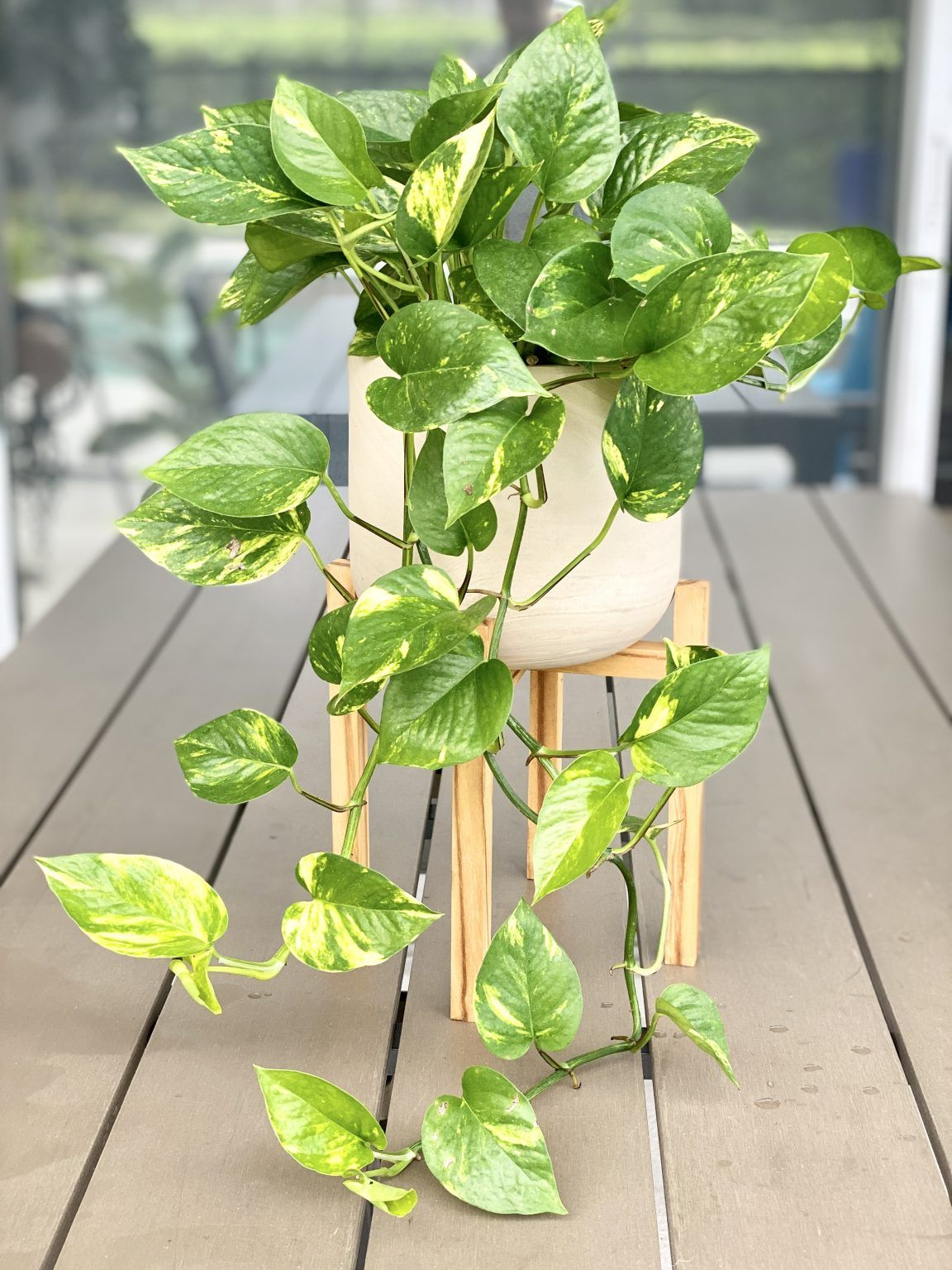
It is also called devil’s vine or devil’s ivy because it is very hardy and stays green even when kept in the dark.
- Easy and forgiving. Quite pest-resistant.
- Evergreen vine with aerial roots which adhere to surfaces.
- Often used in decorative displays in shopping centers, offices, and other public locations largely because it requires little care and is also attractively leafy.
- Indoor plant rarely develops adult sized leaves.
- Grows rapidly in hydroponic culture. Can be cultivated easily from a cutting.
- Toxic for cats and dogs (when eaten).
- Needs:
- Temperatures around 18-25C.
- Moist soil, watering every 1-2 weeks when top layer is dry.
- Repotting every 1-2 years to not get root bound.
- Bright, indirect light is best, but it can adapt to low-light conditions.
- Fertiliser during spring and summer. Best: 10-10-10 balanced fertiliser.
- Pruning!
- Avoid:
- Direct sunlight.
- Cold draughts and sudden temperature changes.
- Best soil for Pothos: 2 parts peat moss or coco coir, 1 part perlite, 1 part orchid bark. Avoid heavy, clay-like soils, they can lead to root rot.
- Great in hanging baskets.
- Pruning:
- Cut just above the leaf node, where leaves attach to the stem. This encourages new growth from that point.
- Trim long leggy vines to promote bushier growth.
- To make a cutting, cut just below the leaf node, remove the lower leaves but keep 2-3 at the top. Put the cuttings in water until they have developed roots (a few weeks), then pot.
Pilea peperomioides (elefantöra, Chinese money plant, UFO plant, pancake plant, friendship plant)
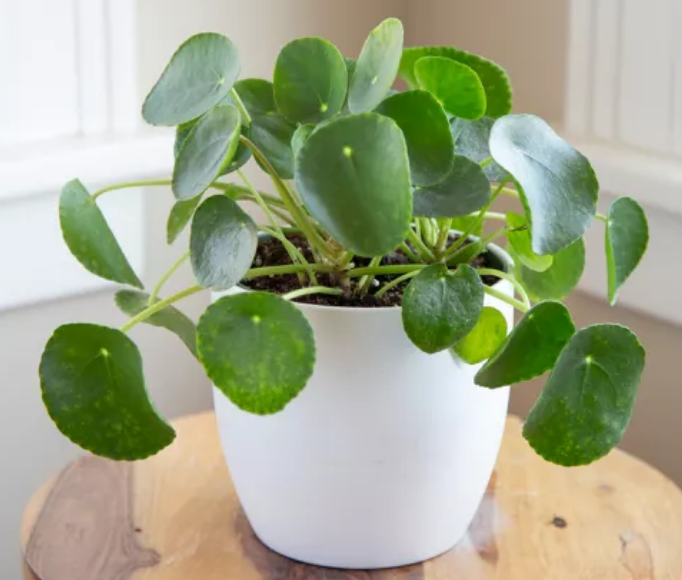
- https://www.thespruce.com/growing-pilea-peperomioides-5090425
- Nettle family
- Native to Southern China, grows along the base of the Himalayan mountains.
- Needs:
- Well-draining soil, pH 6-7
- Partial sun exposure, medium to bright indirect light
- Semi-regular watering: Allow to dry out completely, then water well. About once a week.
- Light fertilizing (once per month) in spring and summer, all purpose fertilizer. Or quarter strength once per week.
- Avoid:
- Locations that receive harsh, direct light ⇒ leaves will burn
- Temperatures < 10C
- Fertilizing during autumn and winter
- Rotate around for even growth
- Very easy to propagate the offshoots. Keep the soil moist until the new plant has established own roots.
- Common problems:
- Curling up leaves: Not enough light, room temperature too high, room humidity too low, watering too much or too little
- Yellow or brown edges on leaves: Room humidity too low
- Browned leaves: Too much direct sunlight
- Yellowed leaves that fall off: Too much water
Hibiscus
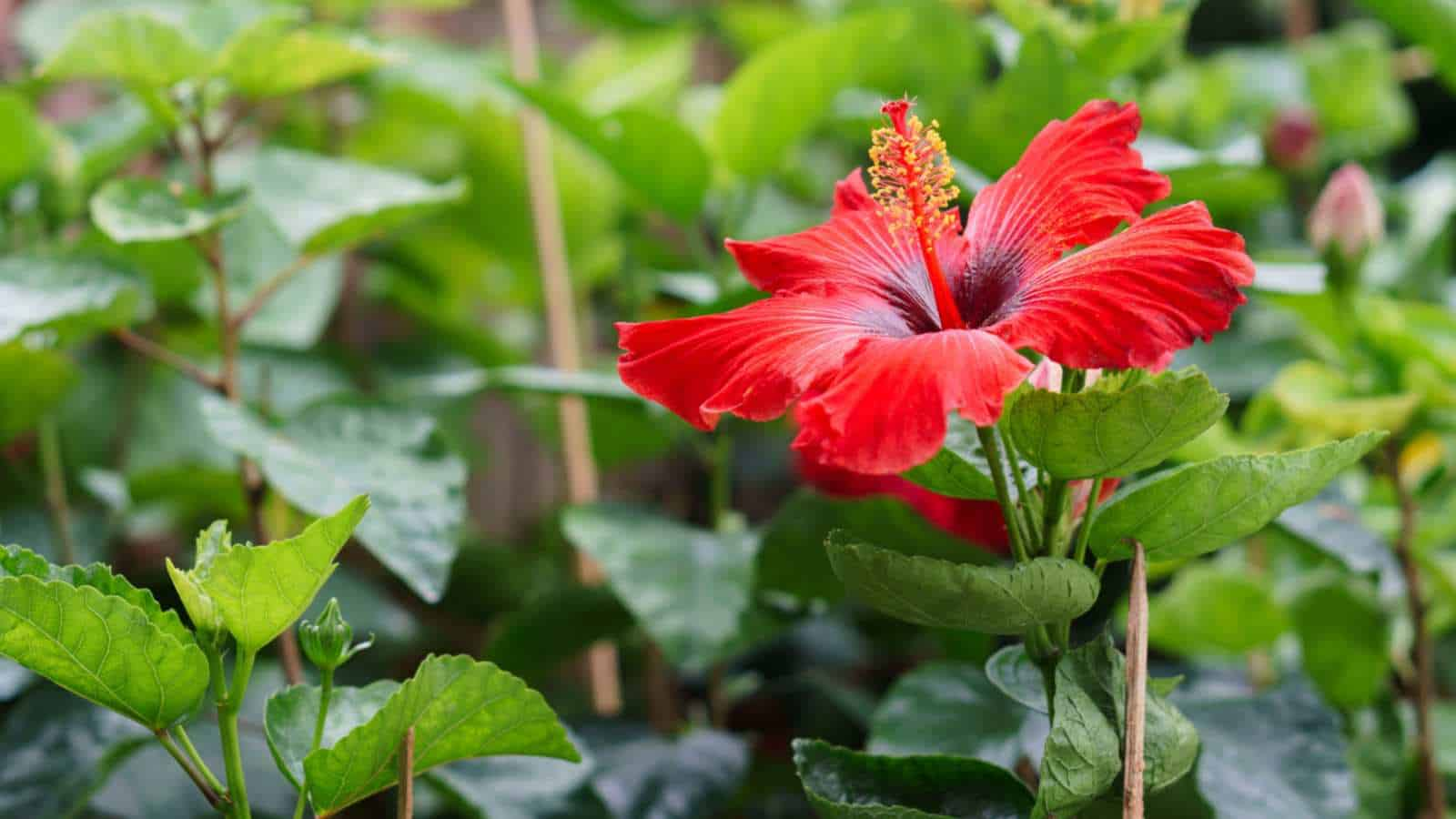
- https://platthillnursery.com/hibiscus-as-a-houseplant/
- Needs:
- Bright window with as much light as possible. The sunniest place in the house is best.
- Like to be watered (prefers consistently moist soil!), but not over-watered. Once the soil is dry to the touch, water.
- Moderate to high humidity.
- Mist plants weekly with room temperature water.
- Fertiliser! It’s quite a hungry plant. Best is high potassium, low phosphorus, like 9-3-13 (“hibiscus food”). High phosphorus can interfere with nutrient uptake and can prevent flowering. Feed weekly during the growing season (spring to autumn)
- For increased humidity, set up trays of pebbles and water around houseplants, and group plants together.
- Avoid:
- Temperatures < 10C
- Keeping them near open windows
- Common problems:
- Brown edges on leaves, bud droop, drooping foliage: Lack of humidity.
- Pruning:
- When young, pinch away the first few buds to encourage more blossoming.
- Prune in autumn/winter when the plant is semi-dormant.
- Clip away the longest branches every few months to manage the shape of the plant and stimulate new growth.
Crassula ovata (Jade plant)
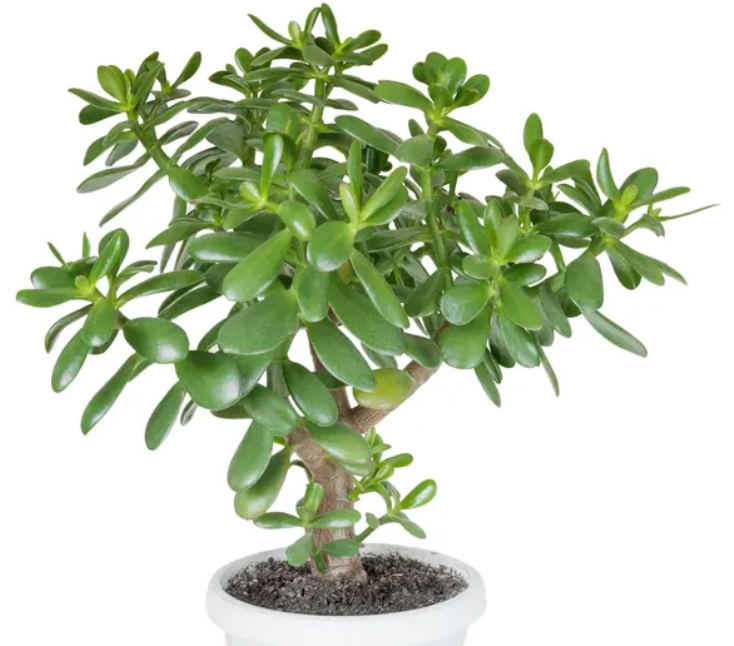
- https://www.almanac.com/plant/jade-plants
- Needs:
- Full sun
- Fertilise only occasionally or with very low strength. Overfeeding a jade is a common mistake — it leads to weak, leggy growth and makes the plant more prone to root problems, since jades are adapted to nutrient-poor, well-draining soil. Quarter strength, only once a month, only during spring and summer.
- If leaves get wrinkled and thin, water more!
Avocado
Grown from seeds
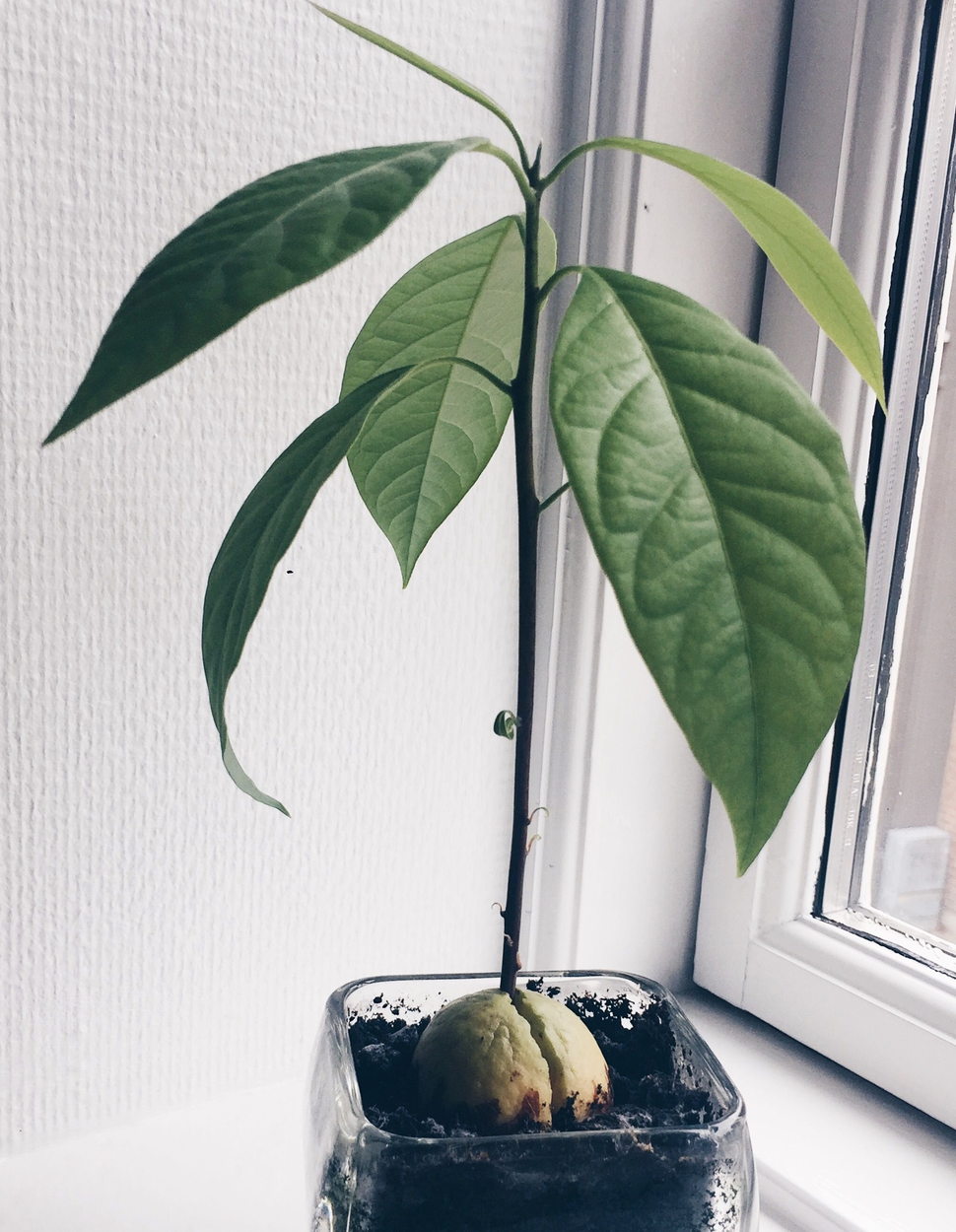
- Needs:
- Bright light, direct sun, south-facing window.
- Consistently moist soil, but not water logged. Water when the top inch feels dry and make sure the pot drains well.
- Medium to high humidity.
- Misting or humidity tray.
- Warm temperature (20-30C).
- Fertiliser during spring and summer, but not during autumn, winter.
- Repot every 1-2 years, in spring.
- Avoid:
- Cold draughts. Sudden temperature swings.
- Root bound.
- Sensitive to under watering (crispy leaf edges) and over watering (root rot, yellowing leaves).
- If leaf tips turn brown, that’s often a sign the air is too dry.
Past plants
Aralia (Fatsia japonica)
Died in 2025
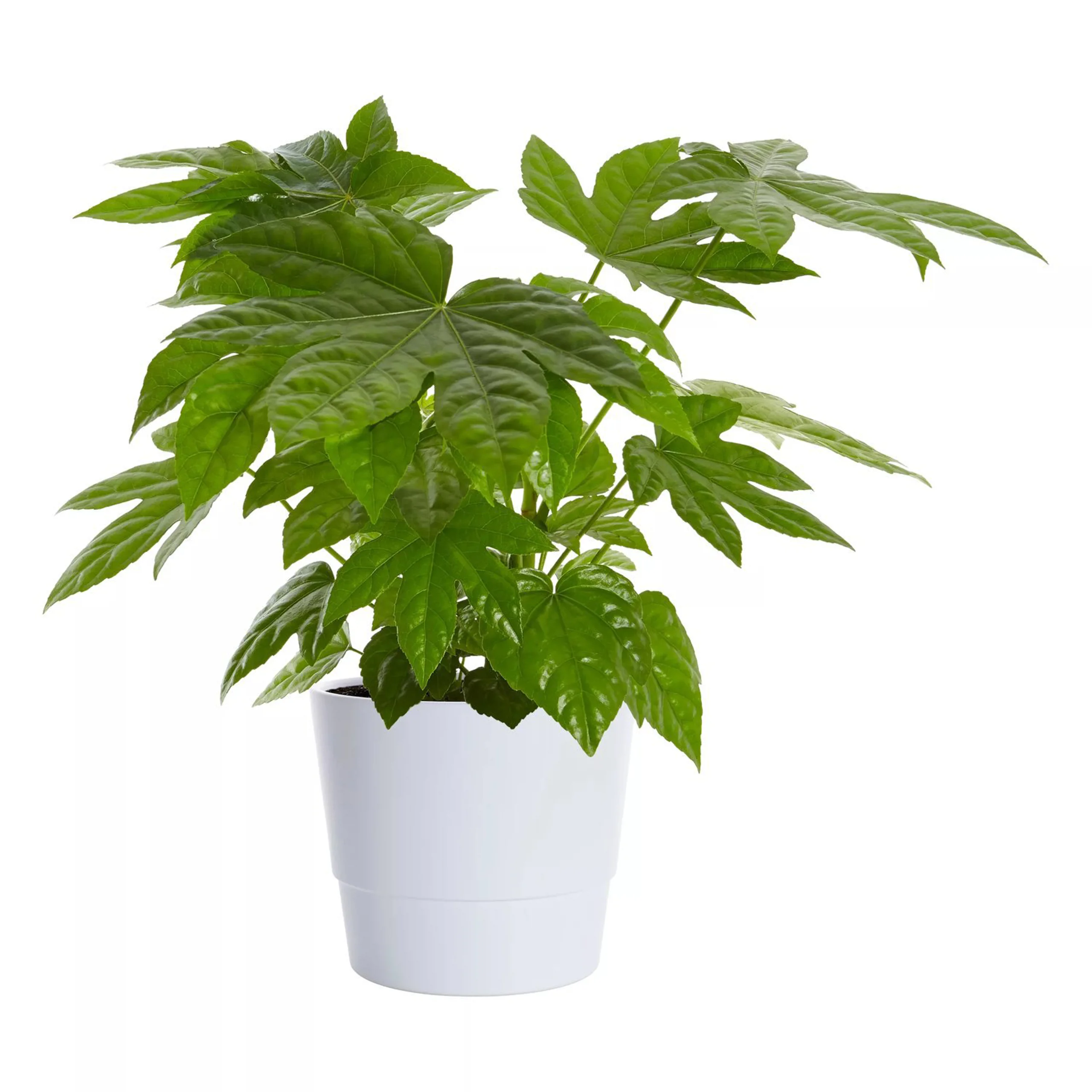
- https://www.blomsterlandet.se/produkter/vaxter/inomhus/grona-vaxter/aralia-2918/
- Half-shady to sunny spots, but not southern facing window. Likes bright, but not direct sunlight.
- Indoor temperature, not below 15C.
- Let the soil dry slightly between watering, but never dry out completely. Once every week or once every two weeks.
- Likes a shower every now and then (esp. in the winter, maybe once a month).
- Fertilise between spring and autumn.
- Origin: Japan (Ryuku islands), Korea
- Use flower soil.
- Can be easily propagated with cuttings.
Sophora, Dvärgkowhai (Sophora prostrata Little Baby)
Died in 2025
- https://dmp.cz/en/blogs/zelene-listy/sophora-little-baby-a-jak-o-ni-pecovat
- https://plant.studio/products/sophora-prostrata-little-baby
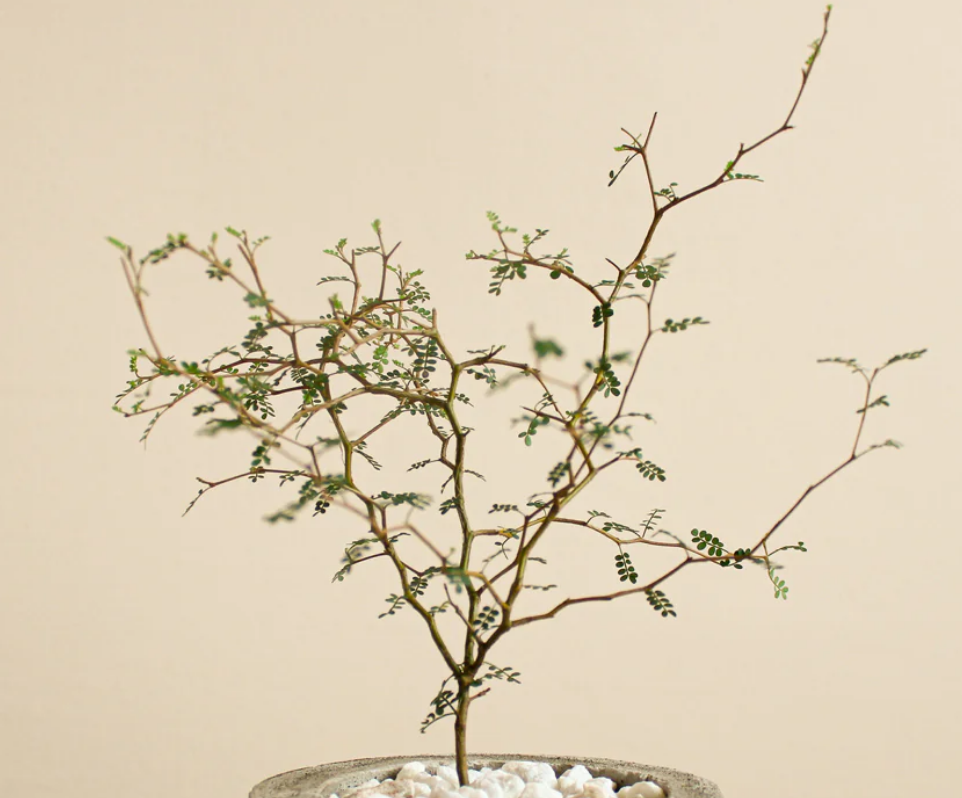
- Likes bright light, can stand outside in the summer.
- Don’t over- or underwater. Check soil; if the first 2 cm are dry - water! Sensitive to underwatering, so don’t use too loose soil.
- Benefits from being in a slightly larger pot to reduce risk of drying out.
- Esp. in winter it likes to stand slightly cooler, e.g. hallway.
- Originally from New Zealand.
- Sheds leaves if it’s too stressed (e.g. due to over/underwatering, change in temperature or light condition). Can often happen in the winter when temperature changes.
Calathea (Goeppertia)
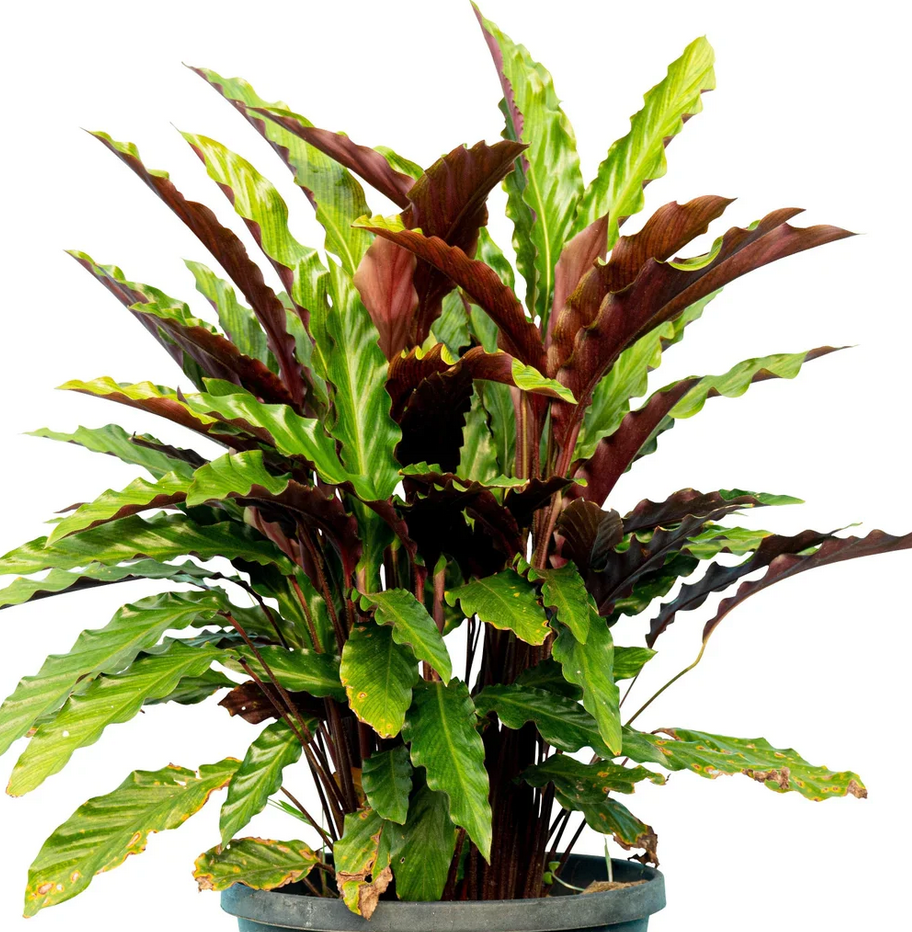 (Calathea rufibarba (Goeppertia rufibarba, furry feather calathea))
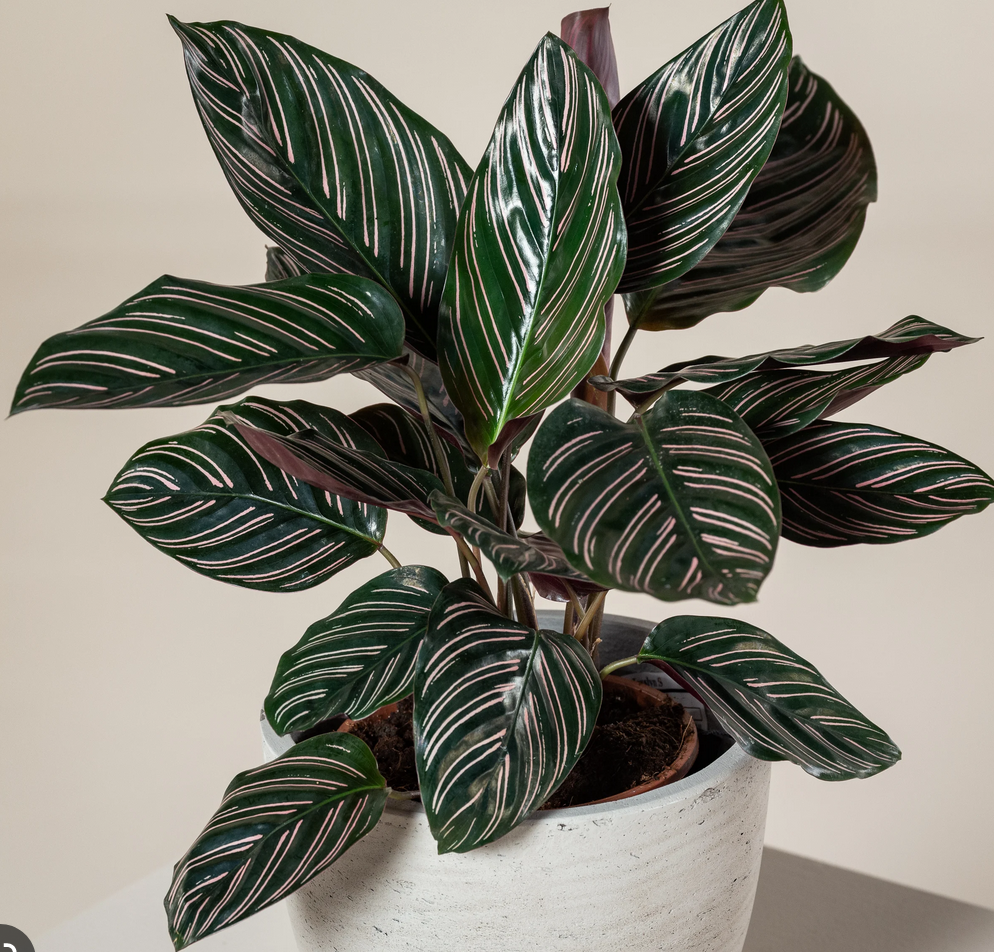 (Calathea ornata (Goeppertia ornata, pin-stripe calathea))
- https://www.gardenersworld.com/how-to/grow-plants/how-to-grow-calathea/, https://mylittlejungle.com/calathea-rufibarba/
- Native to Brazil, Amazon rain forest, forest floor (= warm, humid, indirect light).
- Needs:
- Bright indirect light, but **can grow well in shady areas **too
- Keep soil moist most of the time (but not soggy). Water 1-2 times per week. Water little but often.
- Maintain high humidity (best > 50%). Mist the leaves or put pebbles in water nearby.
- Soil that drains well and retains moisture (mix something moisture retaining - like coconut coir - and something draining - like perlite). Also good: 2:1 soil-based compost and perlite.
- Avoid:
- Drafts
- Direct sun
- Water with high mineral content
- Never let the soil dry out more than an inch on the top!
- Temperatures below 18C.
- Overfertilizing
- Common problems:
- Burnt tips and edges: Mineral burning, i.e. too much minerals in the water. Use filtered, distilled or rain water.
- Leaves drying up or drooping: Too low humidity.
- Burnt leaves, brown patches: Too much light.
- Leaves that curl inwards: Underwatering
- Yellowing or wilting leaves: Overwatering
- Faded leaves: Too much light.
- Occasional lukewarm shower is good to remove dust from the leaves. Best with distilled water, as mineral-rich water can leave white chalky deposits on the leaves.
- Very good for bathrooms (high humidity), but they do need some light.
- Give the plant a good trim to remove dried leaves.
- Doesn’t need much fertilizer. Half-strength during growing season.
- Propagate by repotting: Gently separate the plants, disentangle the roots, repot into new pots.