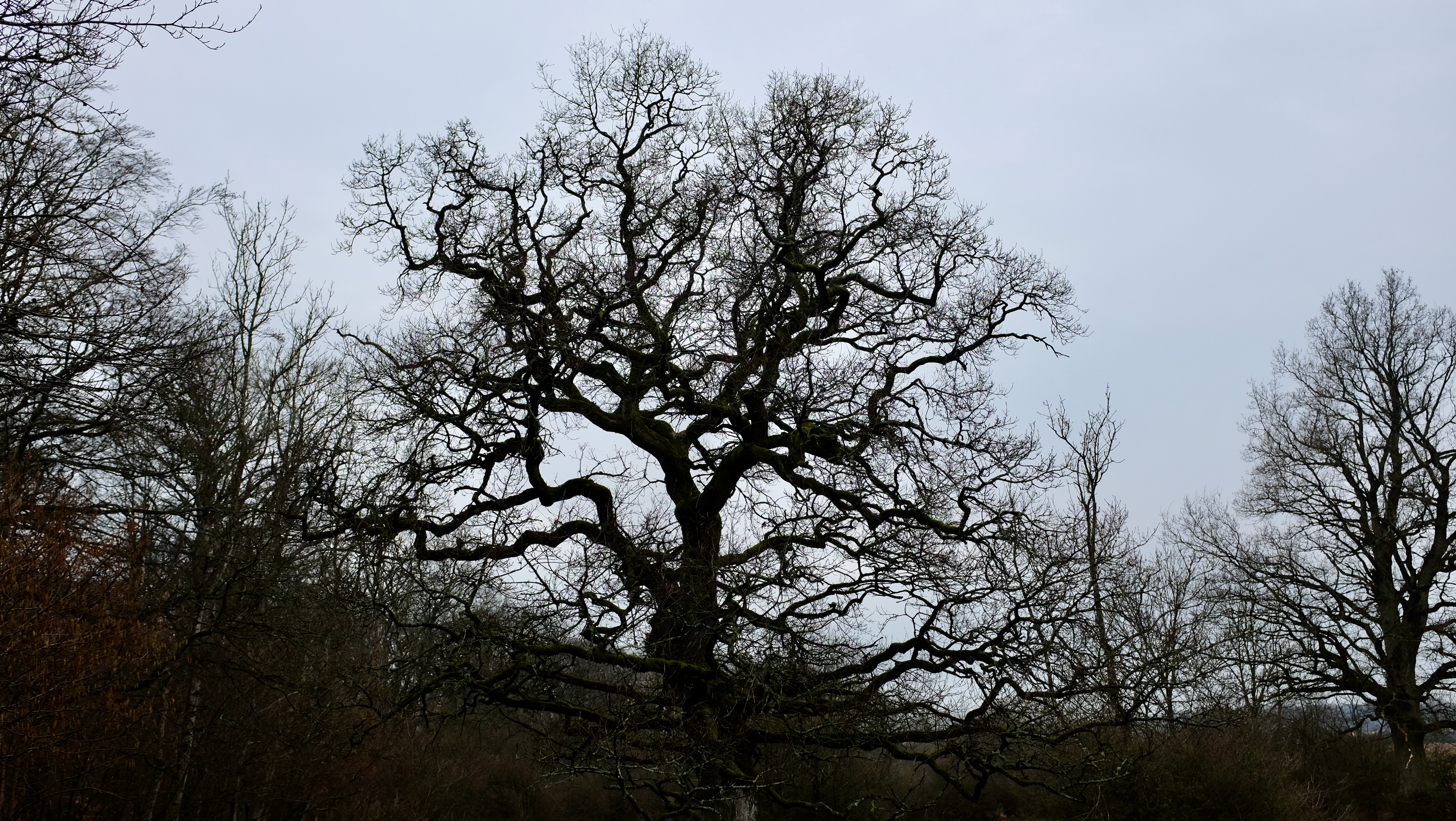
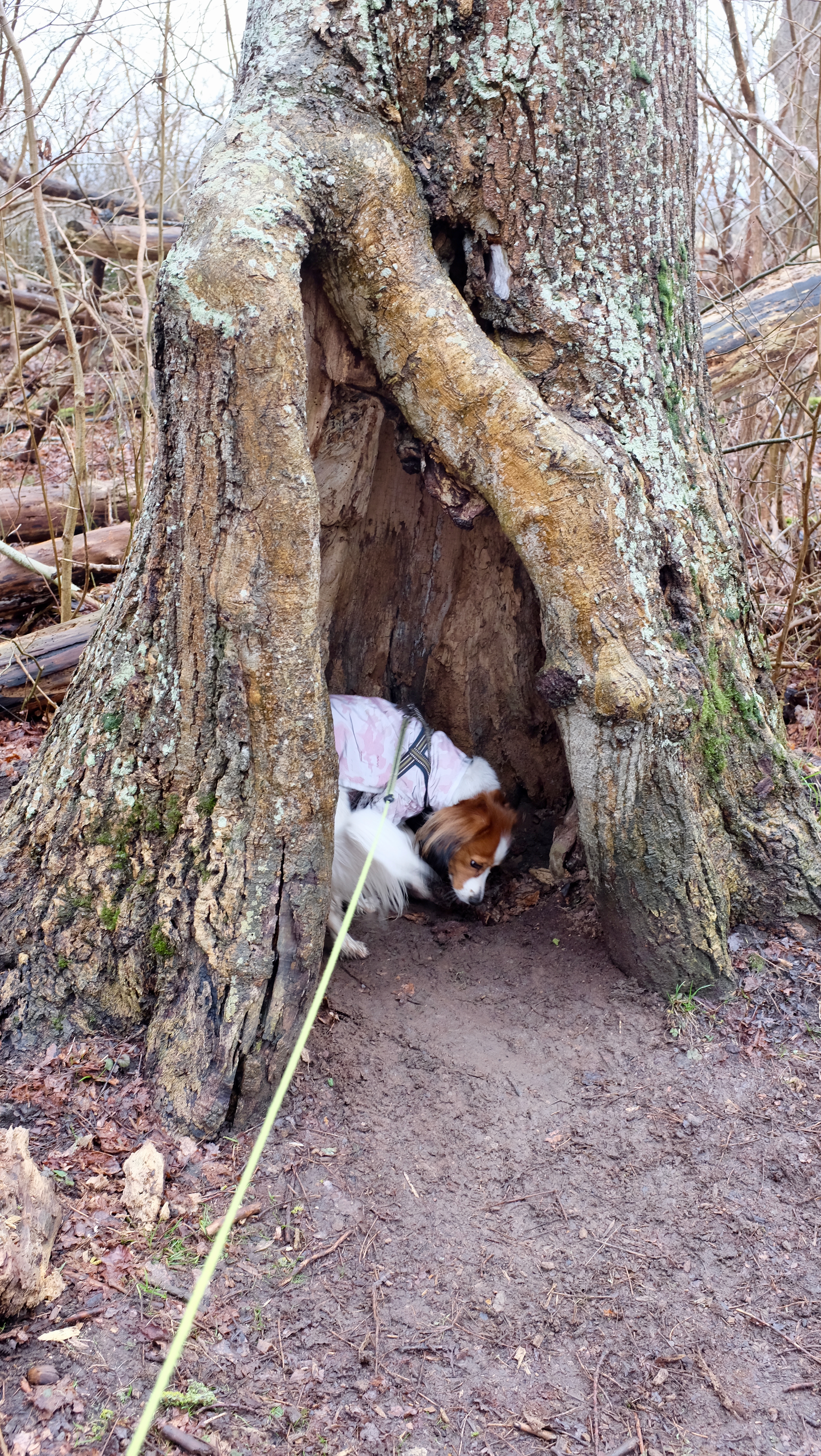
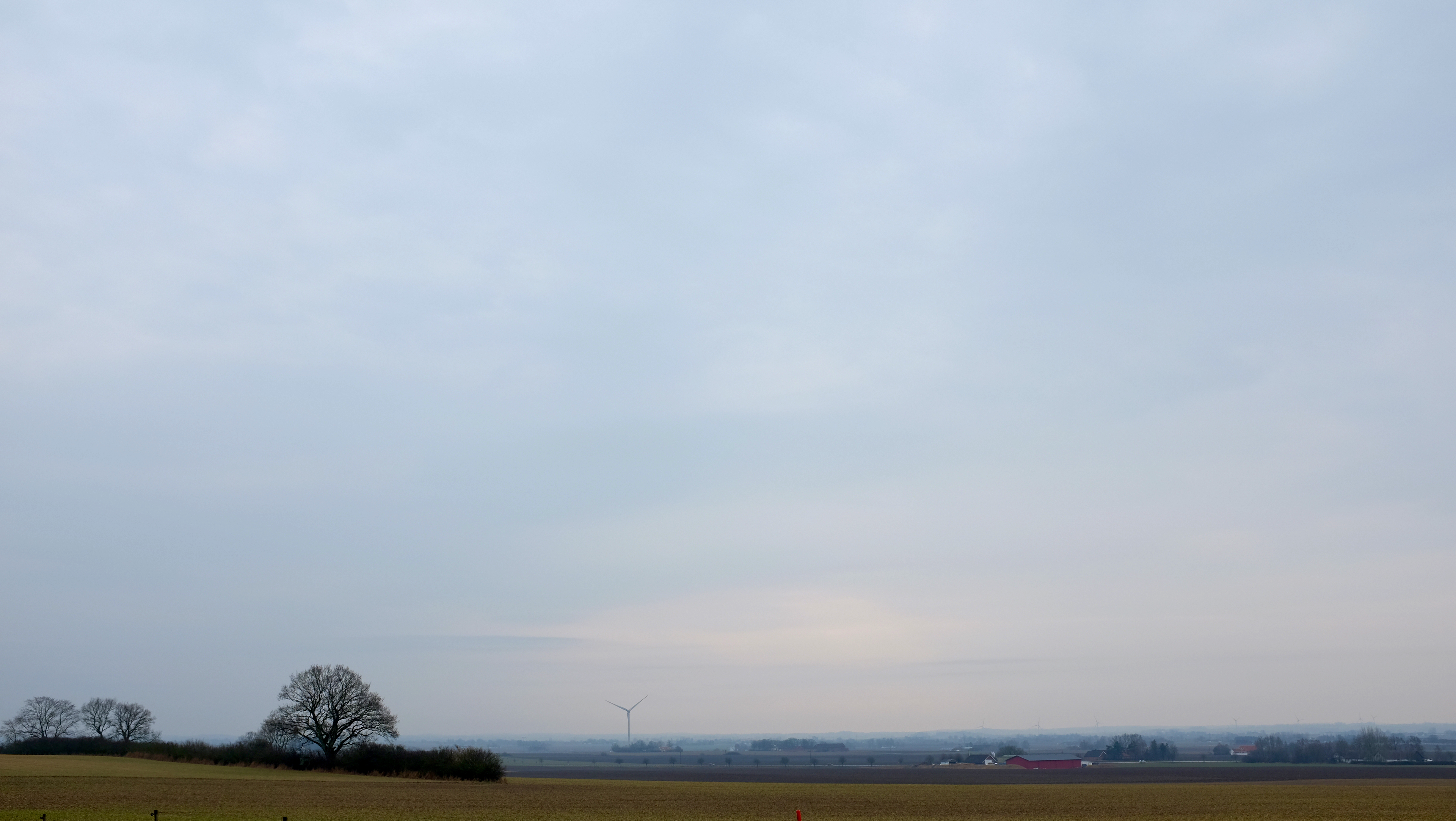
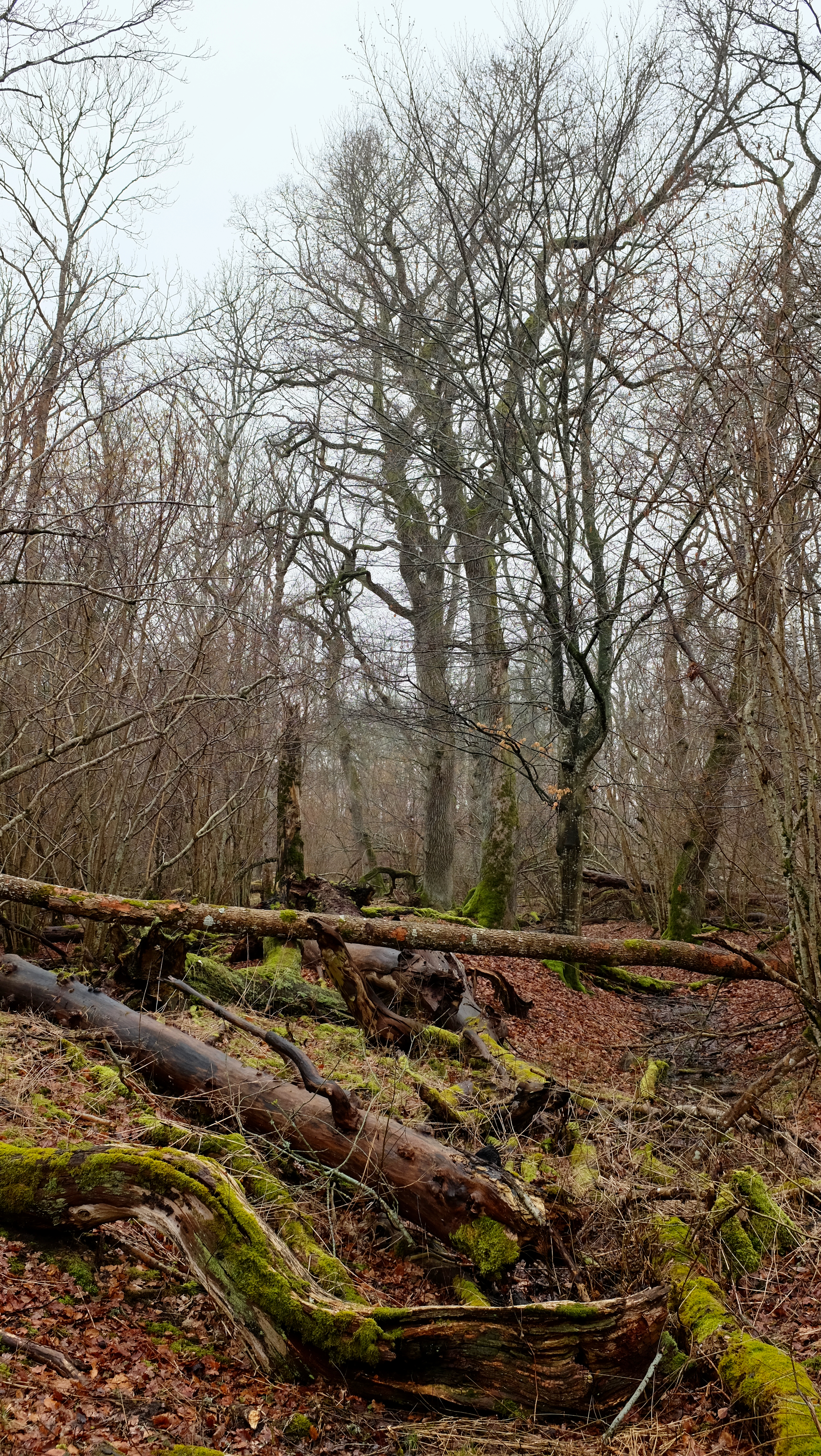
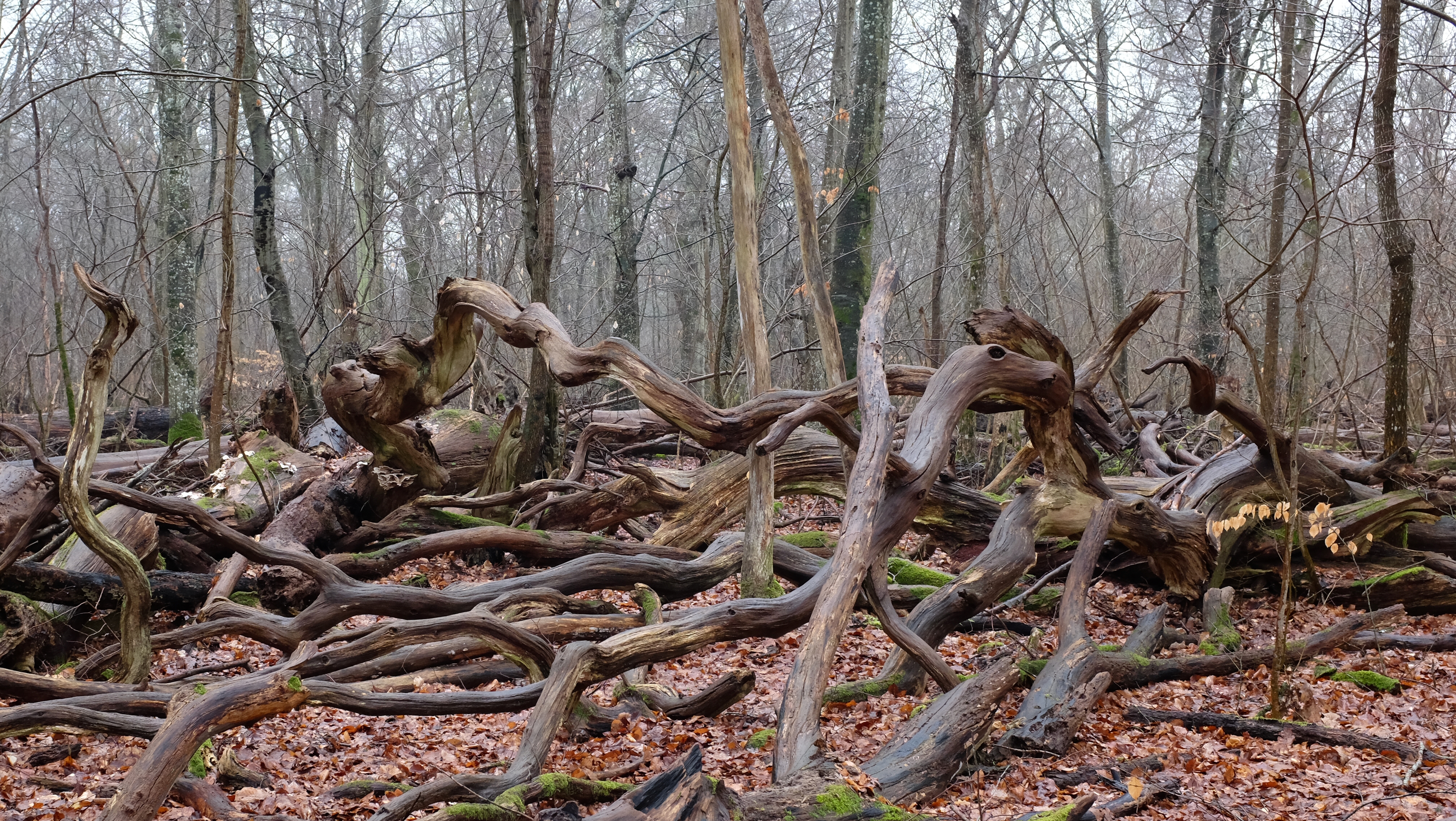
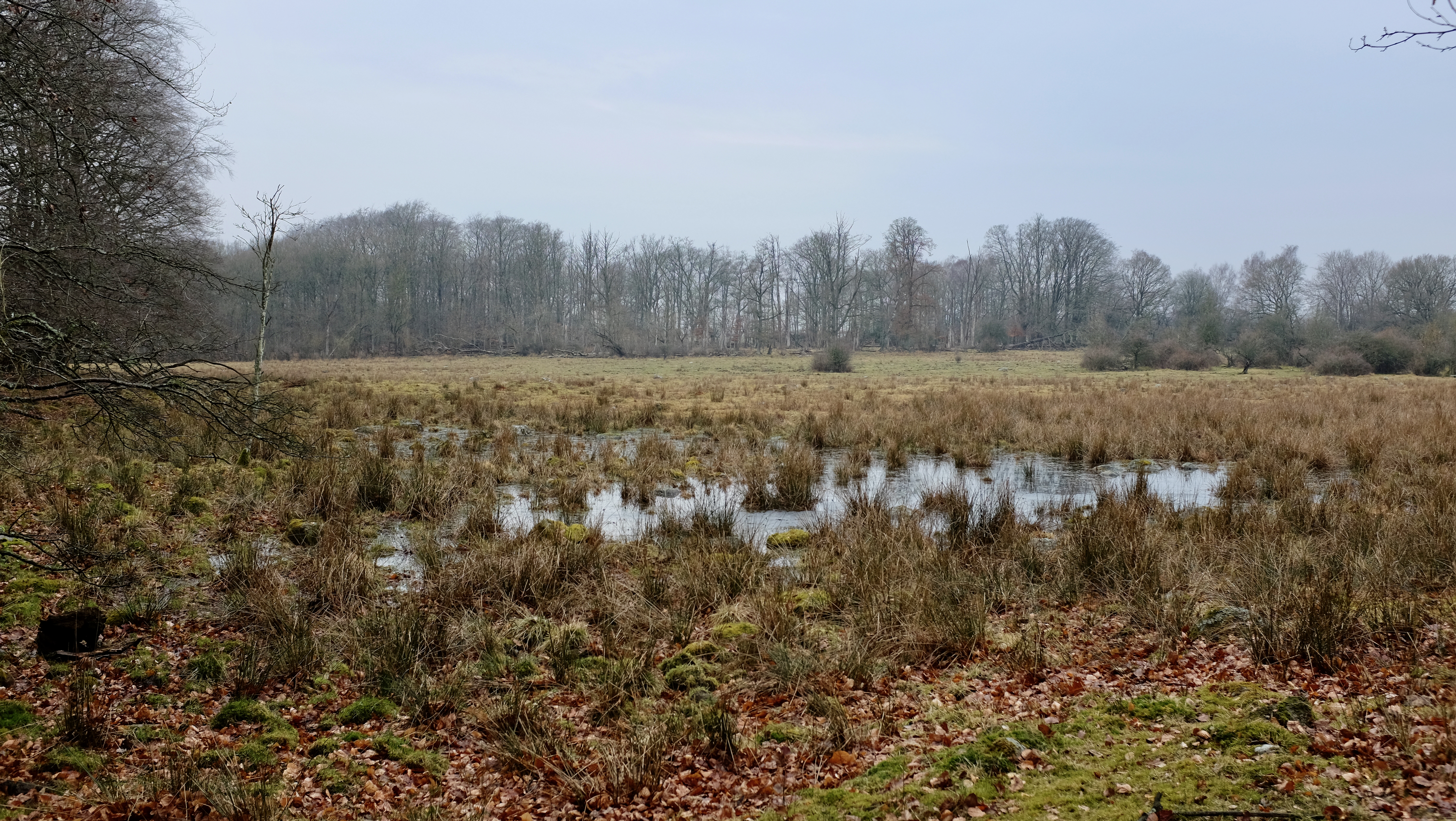
A lot of scraggly wood, old oaks, moss, thick barks, etc. It is VERY small (Europe’s smalles National Park), and without leaves on the trees you’re constantly aware of the borders of the forest, and the fields and roads beyond it.
But it’s still a nice experience to walk through. What I found particularly interesting was to see the differences in tree structure between different species: the oaks with their deep furrows in the bark and wood, often twisted into waves; the telegraph-mast-straight elms; the many-stemmed ash. Lots of dead wood around, which was interesting to observe in detail: all the mushrooms and bugs and hollowed out pieces, the mushy, spongy remains after fungal degradation, the dark or lighter colours of the trees - some completely black as if burned.
We also heard a lot of different birds, including several types of woodpeckers (identified with Duncan’s bird call app).