Frying vs boiling vs grilling
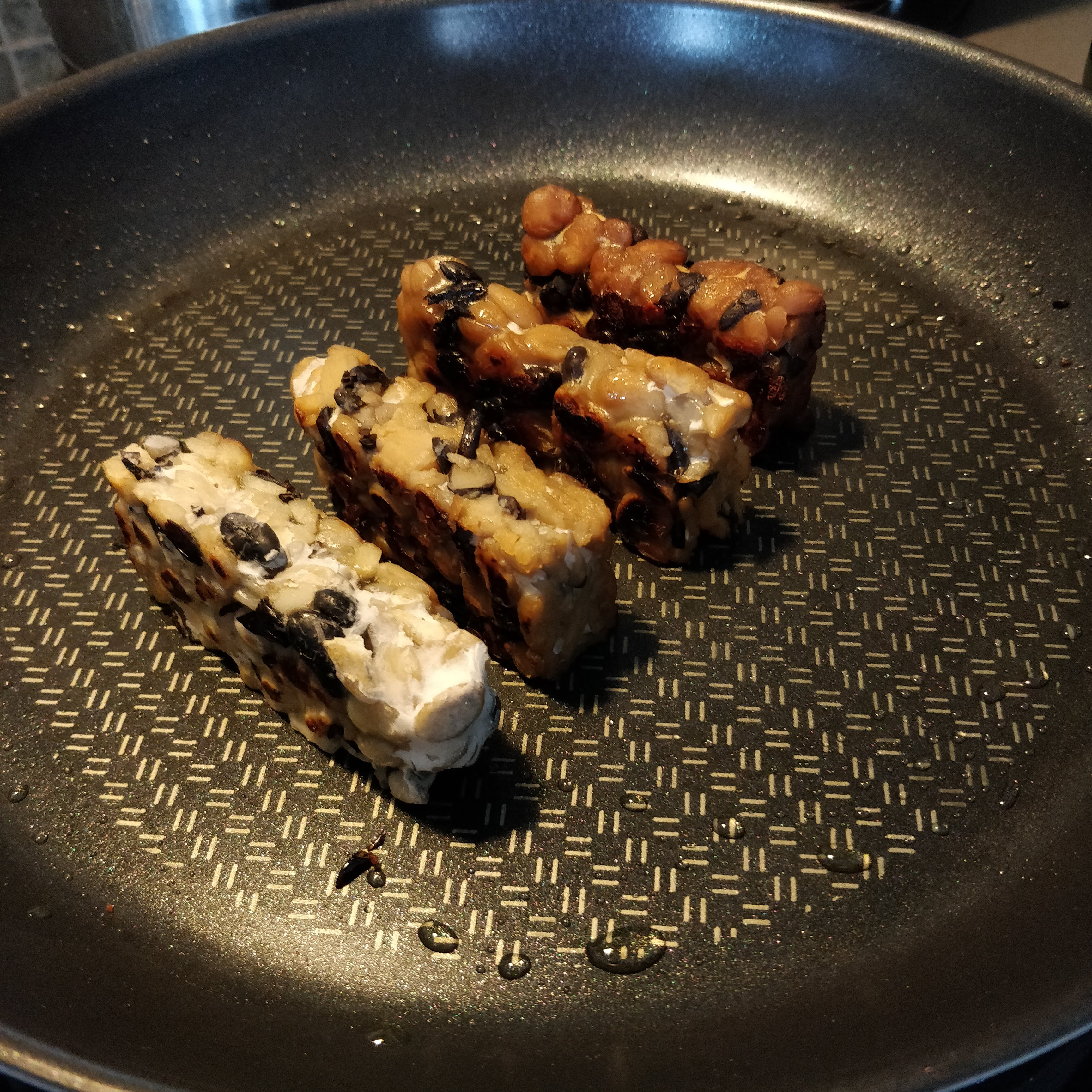
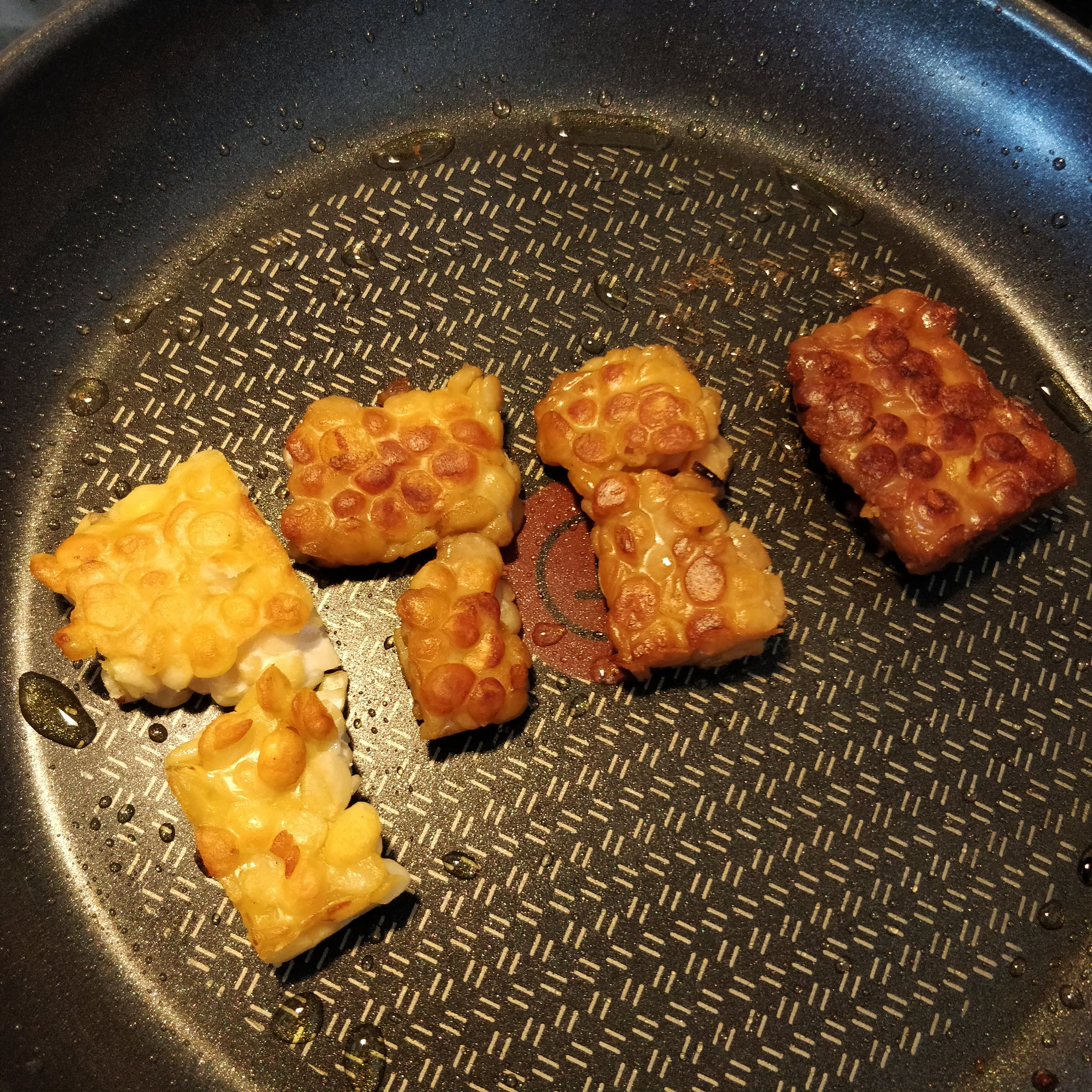
Frying in pan
Green mung dal: (from different beans - 2022-09-09)
Great texture, very chewy and juicy, very meatlike texture and no individual grains noticeable. Some bits have a neutral taste, some bits are very pungent and bitter (overripe?). Duncan liked the taste (or at least found it interesting) I didn’t.
Toor dal: (from different beans - 2022-09-09)
More juicy than chana dal, no clear bean structure visible on bite surface, very homogeneous.
Chana dal: (from different beans - 2022-09-09)
More bean-style than squidgy. Visually very defined beans.
Soy tempeh: (frozen, from 26-08-2020):
Texture between chana and toor dal. Cleanest taste, no bitterness.
Boil in soy-water
200 mL water + 30 mL light soy sauce.
Submerge pieces completely, boil for 5 min. Then after drying, fry in oil in a pan.
Toor dal: Very nice texture, homogeneous, no clear bean structure or taste, good flavour. After boiling (before frying) it was much chewier than soybean tempeh, more meat like and soft, slightly bitter. Chana dal: Better than the “fry only” samples. No weird bitterness, but a bit starchy. After boiling (before frying) the texture is nice, but a bit starchy, but not unpleasant.
Grilled in oven
Chana dal: Starchy and dry. Toor dal: Not as dry as chana, more juicy and a bit crunchy. Soy: Quite beany or vegetable taste, too dry!! —> grilling in oven without any marinade or oil is not a good idea!! Turns out starchy and dry
Conclusions
Toor dal was the best in all cooking styles. Chana was only ok in the boiled+fried samples. Soy was pleasant in the fried, but not pleasant in the grilled. Green mung dal was the juiciest, but too punget (for me). Duncan liked the unusual taste.
—> Maybe soy + green mung bean blend could work well?
Boiling before frying was MUCH better than frying alone. It takes up juicyness and flavour from the boiling liquid. —> test different ways of boiling it (duration, additions, dashi, tamari, etc.)
Boiling + frying of different legumes
For tempeh, see: grains (2020-09-19)
Put every sample (seperately) for 10 min into boiling water (flipping once in between). Then let dry on a rack. Then fry in oil. No salt or soy sauce added this time to keep the natural taste. —> 10 min is probably too much. All samples got very soaked up, and it also cooks the legumes very much.
- Gula ärtor (yellow peas): Crunchy sides are good, quite nice. Duncan found it unpleasantly starchy. They have more own taste (beany/peay, grassy) than other samples. Taste a bit more of something than e.g. the fava beans. Nice bite. Bit starchy.
- Gotland linser (Gotland lentils): Very distinct lentil taste, no chewy texture like in other samples. It’s loosely packed lentils, almost no mycelium between. Starchy.
—> Definitely needs to be mixed with other beans to give it a better texture. But it's a nice addition to a too smooth tempeh! - Fava beans: Very juicy/moist. Potato-cake quality. Pretty good, nice mix between something slightly starchy and meaty.
—> Good candidate for mixing and further experiments! - Brown beans: I don’t know what happened, but they had a really unpleasant, sour taste, even though no (unpleasant) smell at all. Kind of weird. No bite. Disappointing.
- White quinoa: Very juicy, but very dense. No seeds distinguishable, very homogeneous. Kind of beef-like, because it’s a bit too chewy.
—> Definitely needs to be mixed with other beans to give it a better texture. Also, reducing the cooking time might give it a bit more defined texture. - Toor dal: Very chewy, surprisingly homogenous. Kind of pork-vibe.
Worst-to-best ranking:
Brown beans - Gotland linser - quinoa - gula ärtor - toor dal - fava beans. —> Definitely work on the fava beans more, try combinations with quinoa and linser to give it a bit more bite and a nicer look. Also try additions like seaweed, chili, seeds (sunflower, pumpkin, sesame), etc.
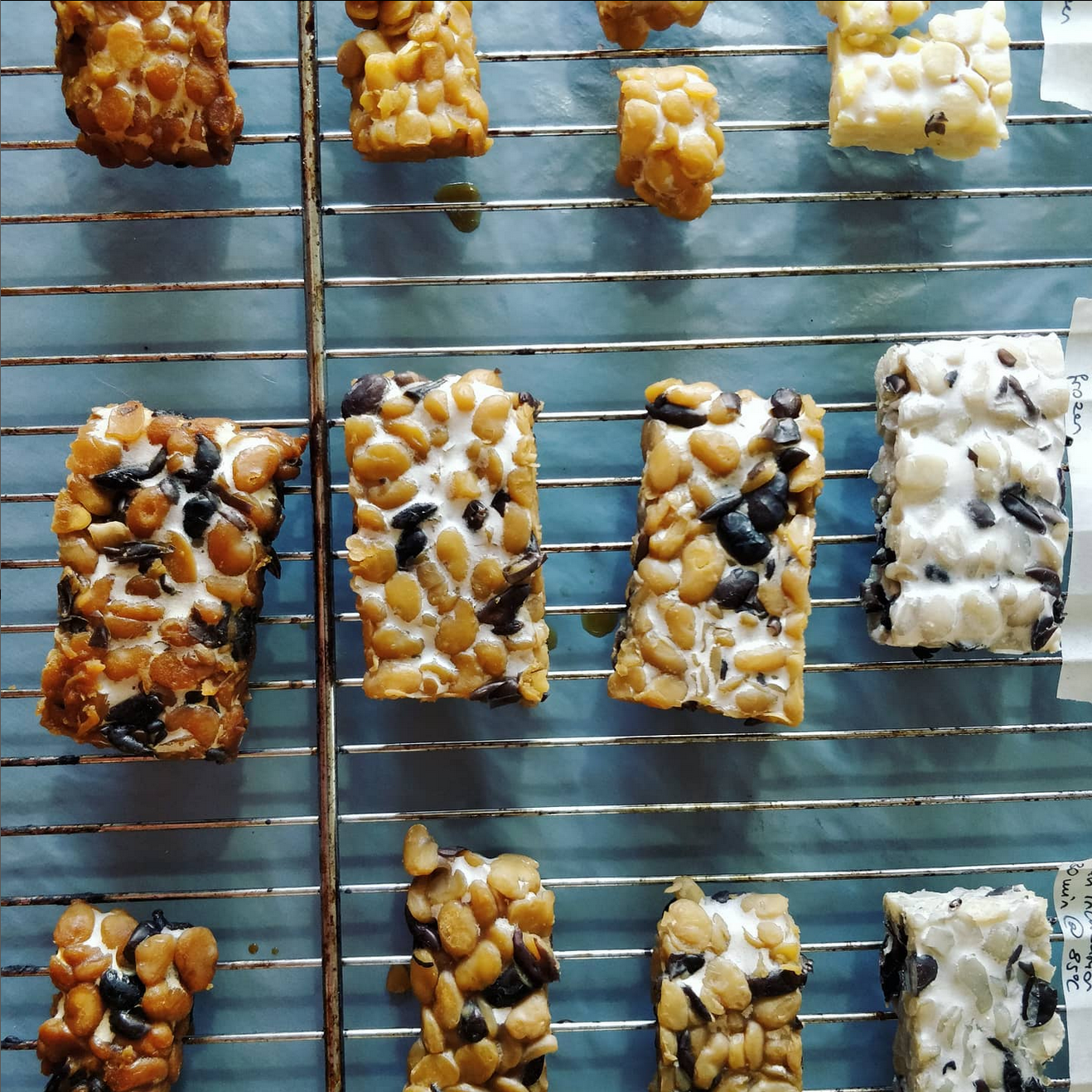
Boiled vs. non-boiled - toor dal and black bean tempeh
Toor dal tempeh Black bean + fava bean mix
Of each tempeh, I have one frozen (8 days) and one heat-treated and stored in fridge.
No visual difference between frozen and heat-treated tempeh (other than that the not heat-treated one is slightly whiter). Slight difference in smell: frozen & thawed has fresh mushroomy smell, the heat-treated one smells mild and slightly stale.
Cooking test
- Unboiled
- Cook for 2 min in 100 mL water + 30 mL light soy sauce, flight half-time
- Cook for 5 min in 100 mL water + 30 mL light soy sauce, flip half-time
- Cook for 10 min in 100 mL water + 30 mL light soy sauce, flip half-time
Cook all samples in oil for the same amount of time.
Conclusions
Surprisingly, the heat-treated tempeh had a better texture than the frozen one! It was not dried out as maybe expected.
In general, the boiled samples were MUCH better than the unboiled samples, both in taste and texture. 5 min boiling was the sweet spot, whereas 2 min was also ok if you don’t want a strong soy sauce taste.
Fava bean + black bean, heat-treated
- Unboiled: Better texture than frozen, bit moist, still a bit starchy but beans are a bit more separated.
- 2min boiled: Right amount of seasoning if you don’t want it to taste of soy sauce. Beans are more separated and less starchy than in frozen variant.
- 5min boiled: Perfect texture, firm beans but still a bit starchy. Not as squidshy as some past trials.
- 10min boiled. Too much soy, but good texture. Maybe good starting point for a jerky?
Fava bean + black bean, frozen
- Unboiled: Bland, very starchy, not enough flavour.
- 2min boiled: Much better already (compared to unboiled), bit dry and starchy, probably enough flavour.
- 5min boiled: Good smell, good taste, slightly less dry than 2min boiled. Nicely compact, really good flavour, a bit like a bean burger, still a bit starchy.
- 10min boiled. Took up a lot of soy sauce, so more flavour and salt than the others. Good flavour. Similar texture to 2min and 5min, but a bit more homogeneous.
Toor dal, frozen
- Unboiled: Fresh grassy note, very different texture to fava bean + black bean, almost potato-y.
- 2min boiled: Tastes like a potato. Nice flavour. Needs something else in it, not only toor dal.
- 5min boiled: Same as 2min boiled, but slightly saltier.
- 10min boiled: Same as 2min and 5min, but more (soy sauce) flavour.


Red quinoa burgers (2020-11-27)
Fermentation: Red quinoa burgers (2020-11-27)
Two different cooking methods:
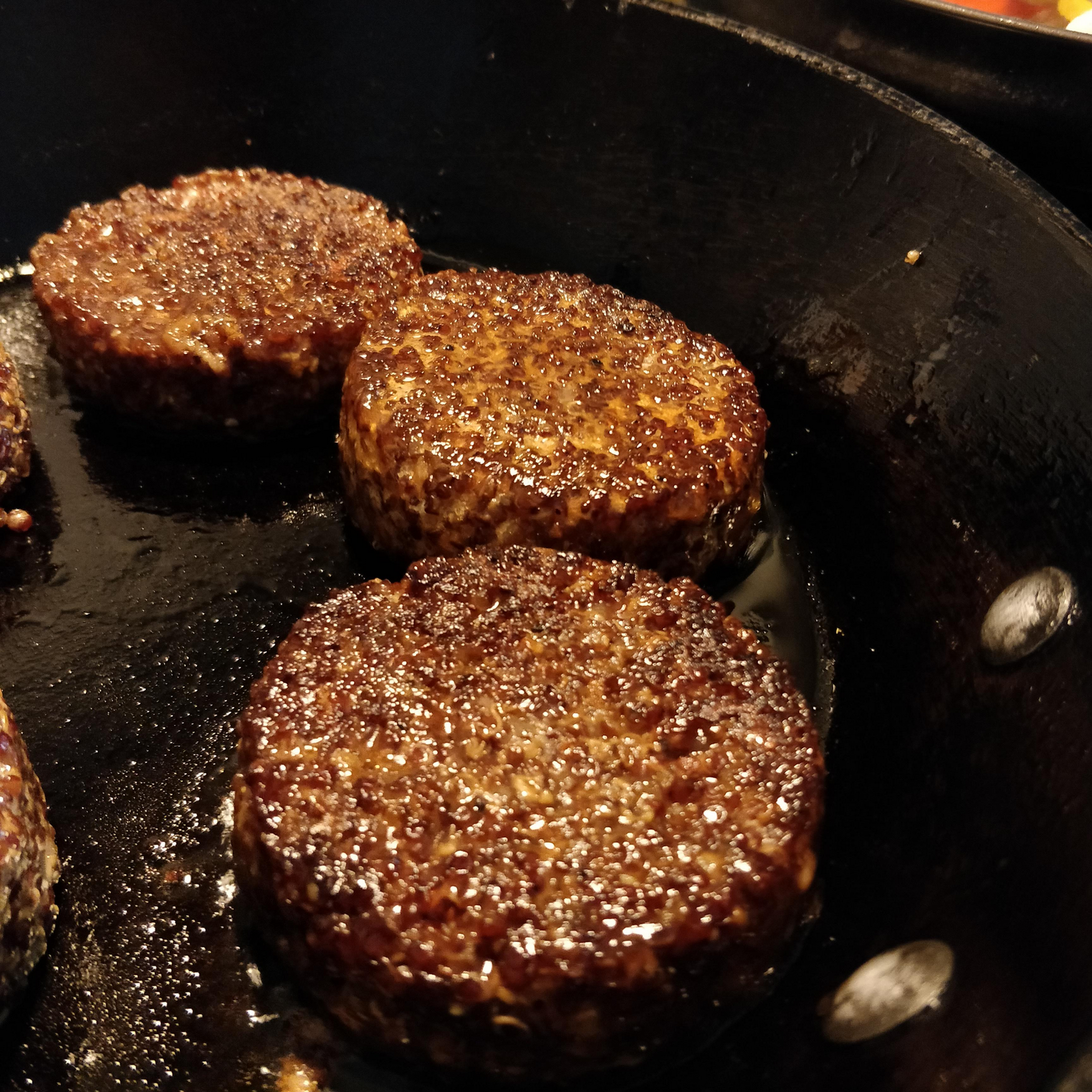
- Simmer in soy-water: 100 mL water + 30 mL light soy sauce, 10 min simmering. Fry in oil.
- Marinate: 1 Tbsp HP sauce + some sugar + 1 glove of garlic, minces + some apple cider vinegar + some soy sauce. Marinate for 2 days in the fridge. Fry in oil.
Conclusion
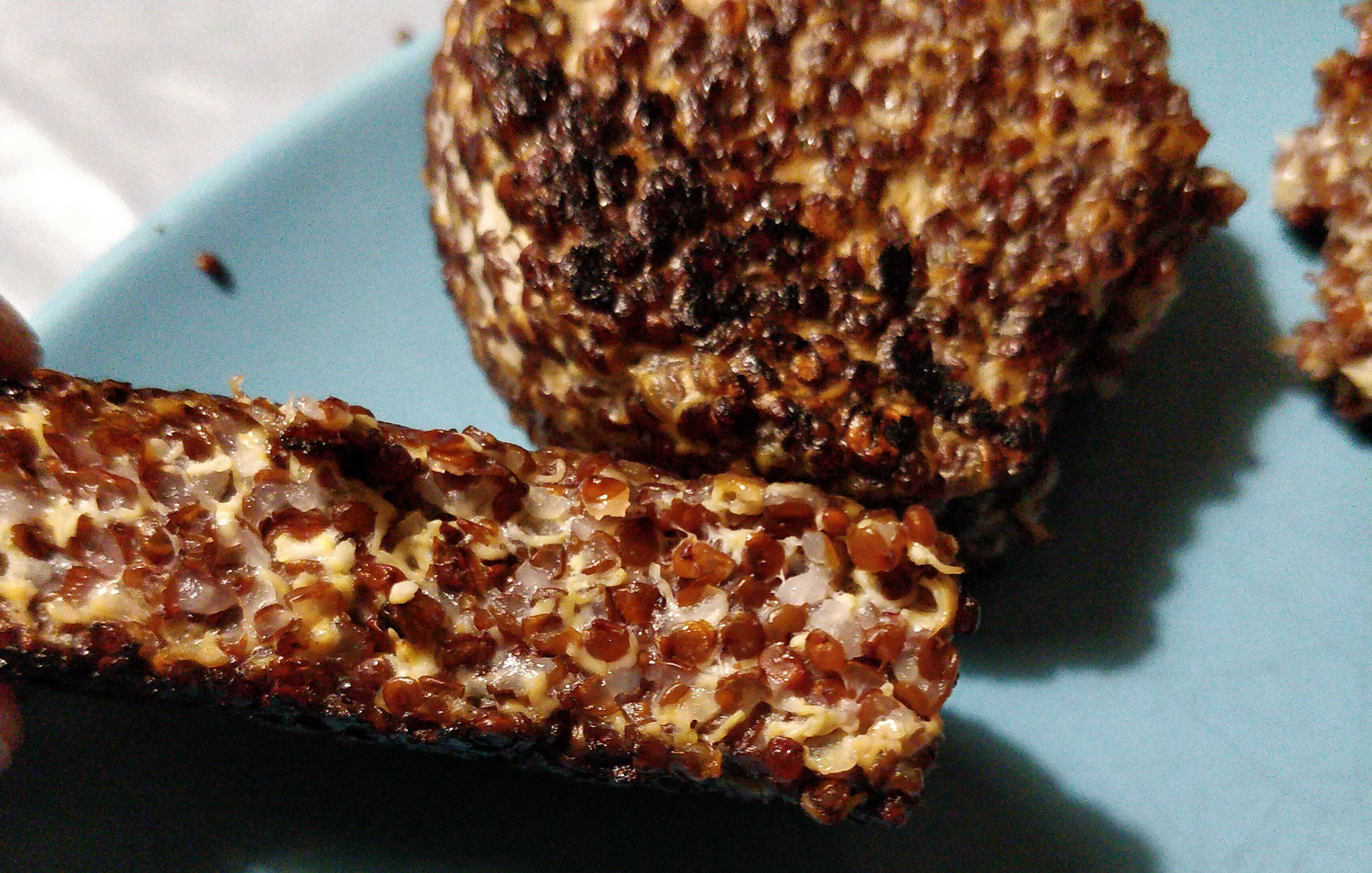
The marinated burgers look VERY burger-like and brown super nicely. The boiled ones remain a bit white and “raw”-looking. Texture is good, a bit of chewiness and juicyness, but also a little bit porridge-like. The boiled ones have a slightly better, because slightly tougher, texture. The taste is very good, particularly of the marinated ones, quite meaty actually because they also soaked up a lot of flavour and also a lot of fat during frying.
—> Definitely something that could be served to other people.
See also Mycobrewery instagram 2020-11-30
Toor dal + black bean tempeh: gulasch and Wellington (2020-12-01)
Gulasch
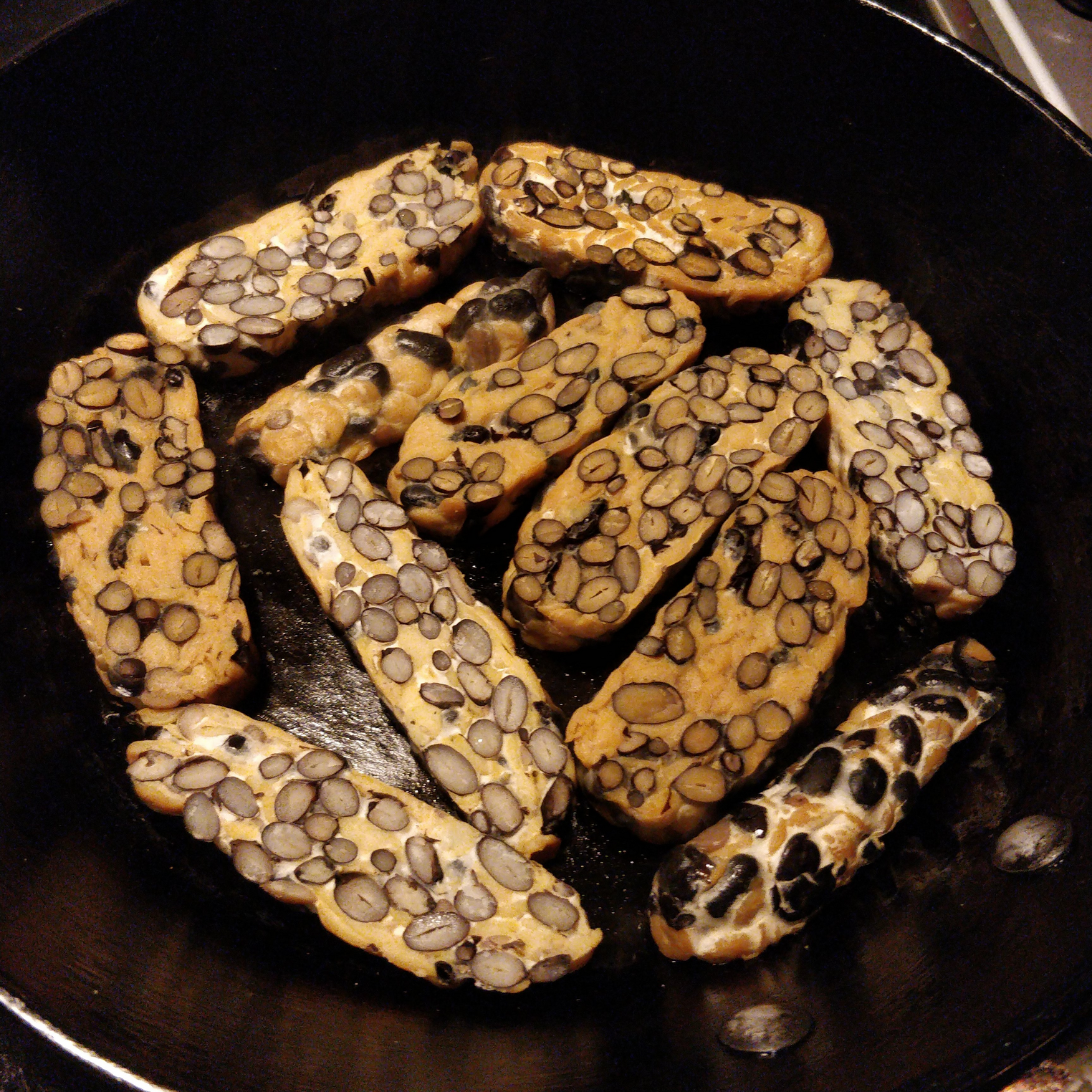
I fried the tempeh bits with onions and then added paprika powder, stock, etc. Cooked it for almost 1h, but the tempeh held up quite nicely. It became soft, but didn’t fall apart completey, but the black beans came out of the cake.

Wellington
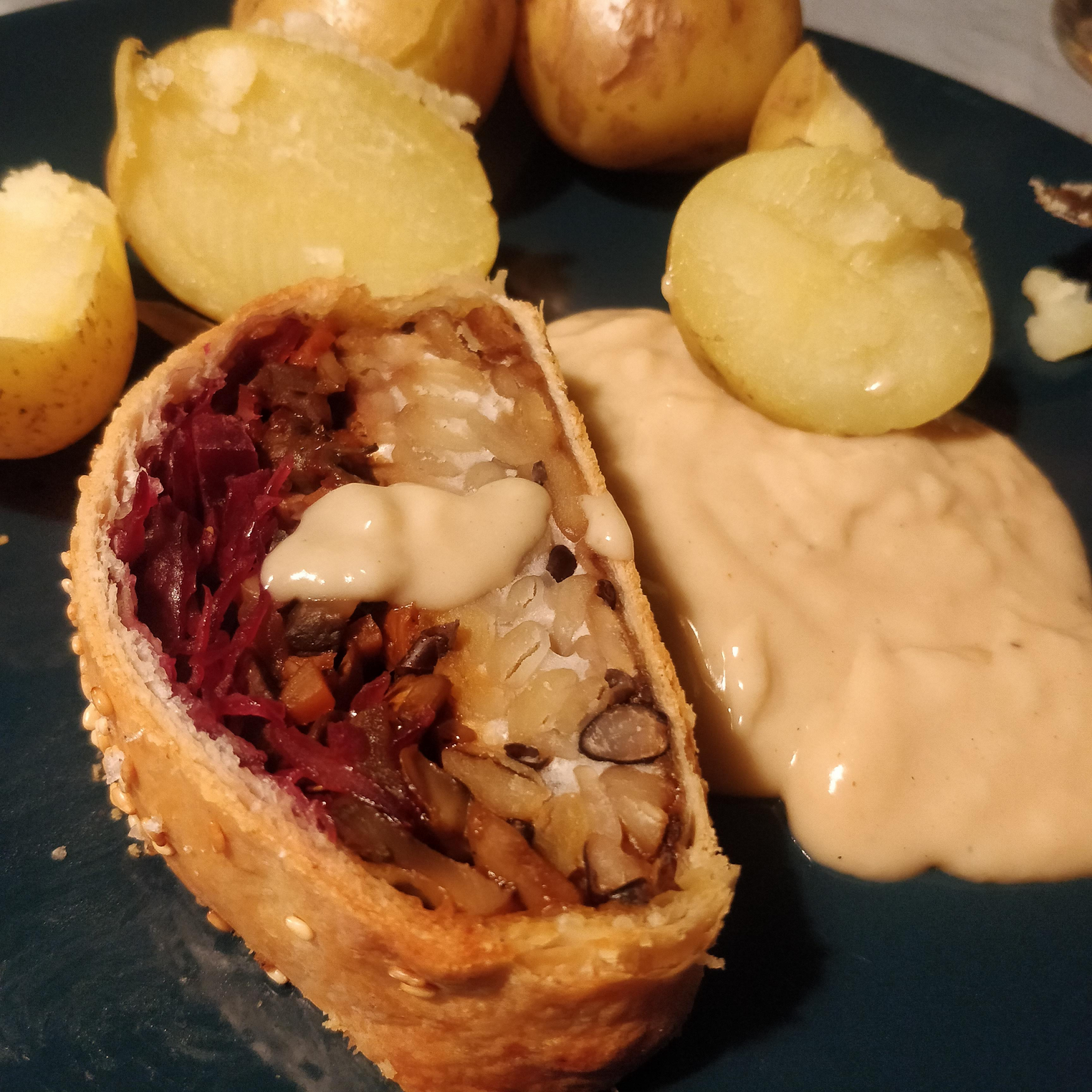
1 Tbsp of each soy sauce, shio koji, vegetable oil, HP sauce. Some salt, some pepper, some paprika powder, 1 garlic clove (pressed). Marinate the whole cake or slice of it in the marinade in a plastic bag in the fridge for 2-24h. Then fry wrap in pastry with sauerkraut and fried mushroom-onion mix.